
Polyvinyl Chloride (PVC): Versatile, Widely Used Thermoplastic
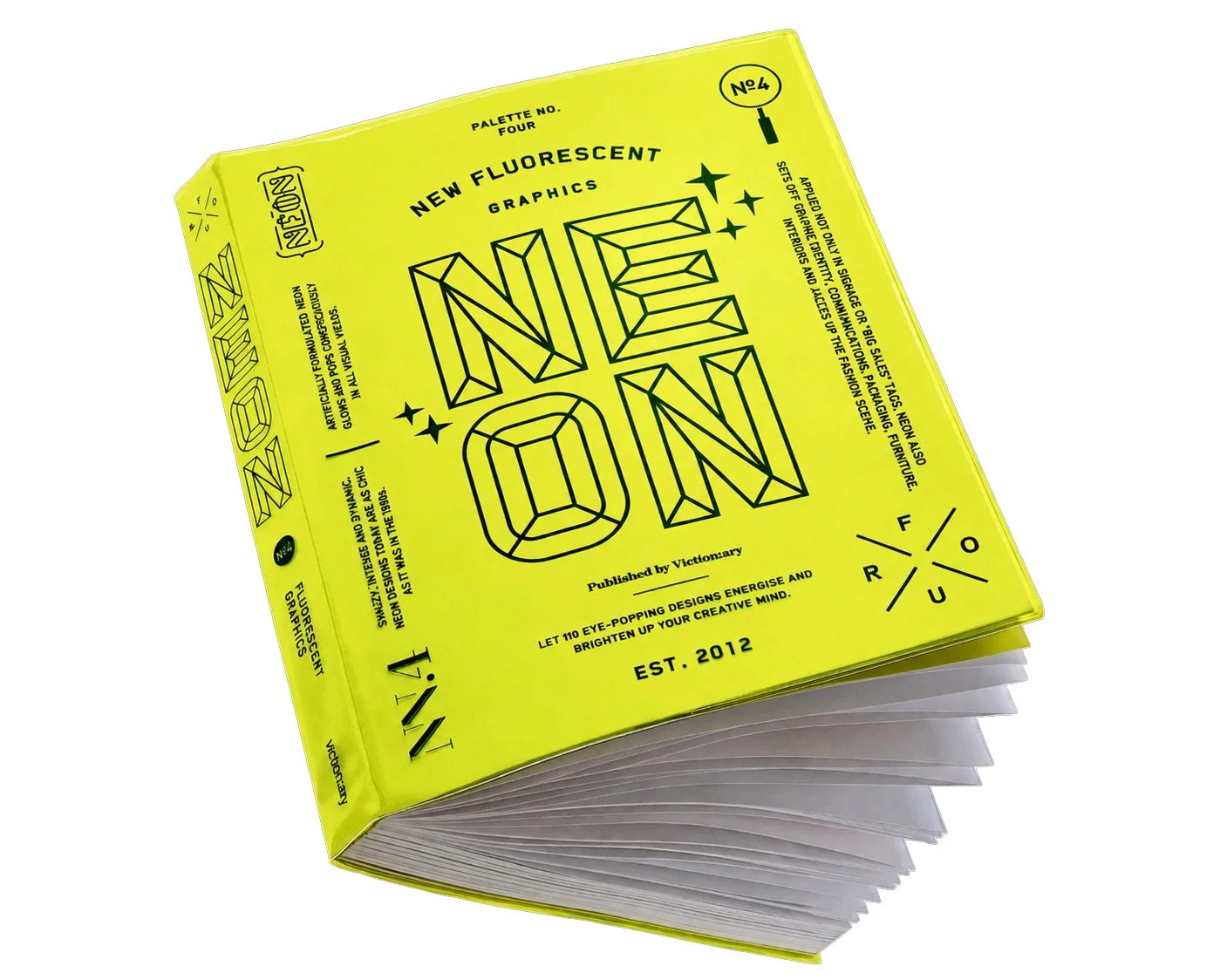
Fluorescent PVC softcover for a book_ PVC provides an ideal synthetic cover material; it is flexible, durable, takes colour very well, and can have print applied directly on its surface. The Material Sourcebook for Design Professionals_ P127
Polyvinyl Chloride is an amorphous thermoplastic, meaning its polymer structure is not rigid. As a result of its random structure, PVC presents itself as a transparent, dimensionally stable plastic with low shrinkage (holds its shape well), and it does not have a sharp melting point; so it only gradually softens when heated. Its unique character comes from the inclusion of chlorine atoms in the polymer structure. Although it has an amorphous morphology, PVC is durable, lightweight, resistant to oils and chemicals, and has fire-retardant properties.
PVC is viscous when molten (thick, sticky consistency that resists pouring) and therefore isn’t suitable for large injection moldings. PVC is either combined with plasticizers to make it flexible, or left unplasticized (uPVC or PVC-U) if the end use requires stiffness and rigidity. Plasticized PVC would be used in blown-film packaging, faux leather, and chemically resistant gloves, while uPVC would be used in rigid applications such as flooring, pipes, and complex extrusions, such as window frames.
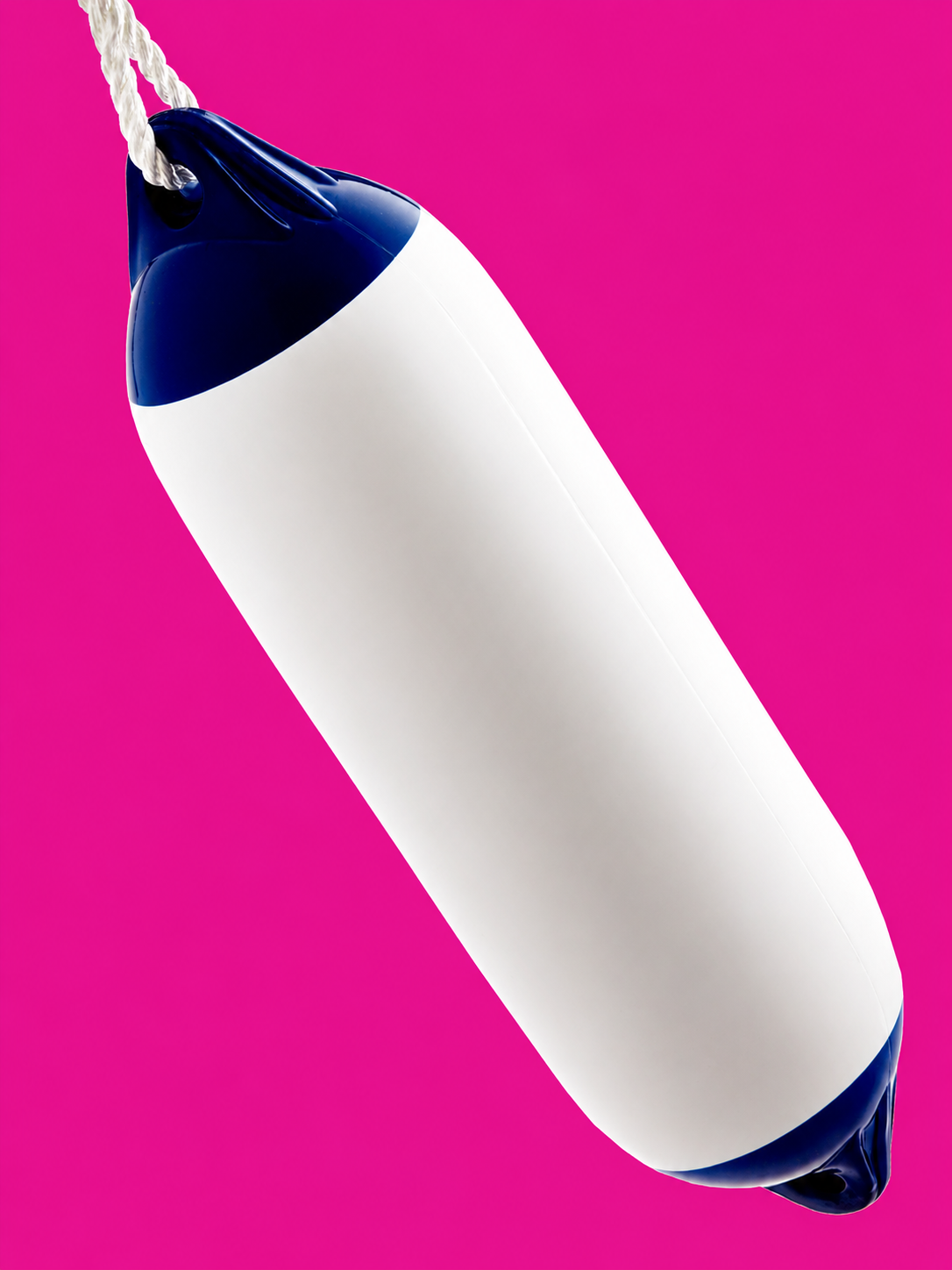
Air-Filled PVC Watercraft Fender_ Produced by rotation molding, liquid PVC is poured into the mold, which is rotated as it is heated and cured, ensuring an even wall thickness throughout. The ends are coloured by dip coating. Where further rigidity and strength is required. The Material Sourcebook for Design Professional_ P. 125
Unlike copolymers, plasticizers are not chemically bonded into the polymer chain. The chemical is free to move through the plastic and, over time, it can migrate to the surface. The plasticizer is then lost to the atmosphere through evaporation and abrasion, causing the PVC to become embrittled over time.
A range of additives can be combined with PVC during compounding to enhance processability, elasticity, impact resistance, and fire retardancy. In addition, PVC can be alloyed with other high-performance plastics and so is available in many different configurations. For example, impact strength is improved with the addition of ABS, PE or EVA.
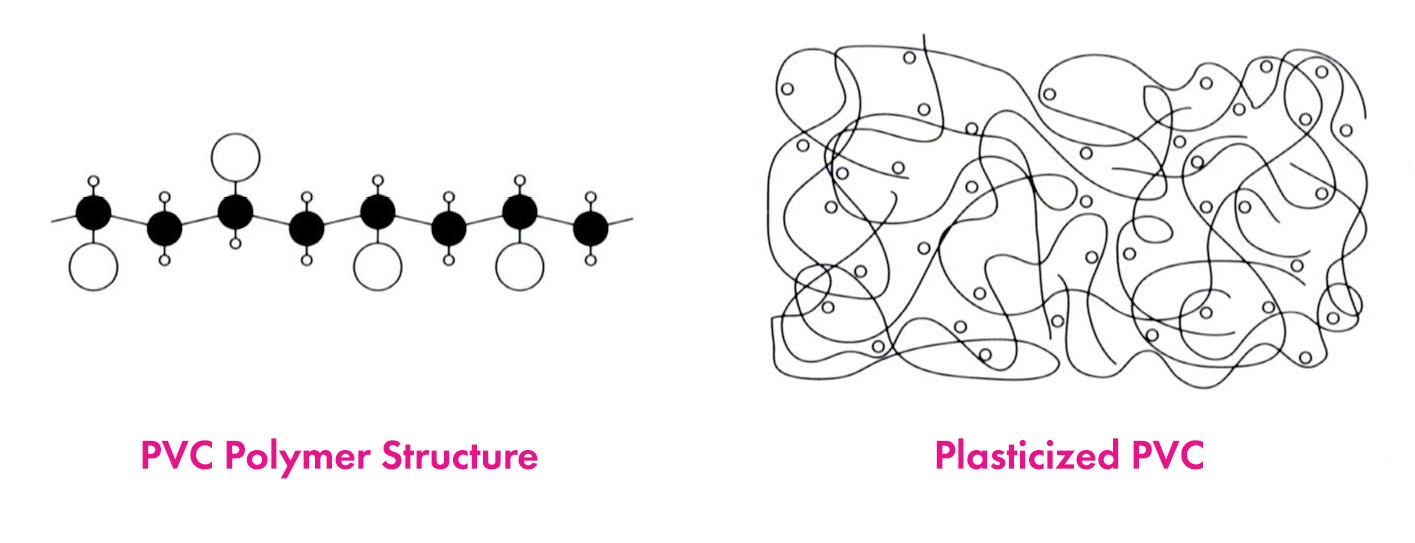
PVC’s Polymer structure is linear, with the addition of large chlorine atoms, which are randomly distributed, making it difficult for the chains to pack together in an orderly fashion. As a result, PVC is amorphous with only small areas of crystallinity. However, unlike other amorphous plastics, PVC tends to be quite stiff and brittle because the chlorine atoms facilitate relatively strong bonds between the polymer chains. Plasticizer reduces the effect of these bonds, resulting in a more flexible plastic. The Material Sourcebook for Design Professionals_ P124
The embodied energy of PVC (the total energy consumed to produce, transport, maintain, and dispose of a material or product throughout its entire lifecycle) is relatively low compared to other plastics, because around half its molecular weight is derived from salt. The remainder is derived from hydrocarbon feedstock, such as oil or sugar crops. PVC is recyclable, but not in your home bin, it must be brought to a recycling centre, it is identified by code #3.
The downside: a key ingredient, vinyl chlorine (VC) monomer, is highly flammable and a carcinogenic. Generally, almost all of the VC monomer is polymerized in the production of PVC, however it is possible for small amounts to remain unpolymerized which can then migrate from plastic into surroundings or food. In flexible PVC the plasticizer may contain phthalates. Some stabilisers used in uPVC to stop yellowing, may include tin, lead and cadmium. Non-toxic stabilisers (calcium-zinc) and non-phthalate plasticizers are available however must their inclusion must be requested.
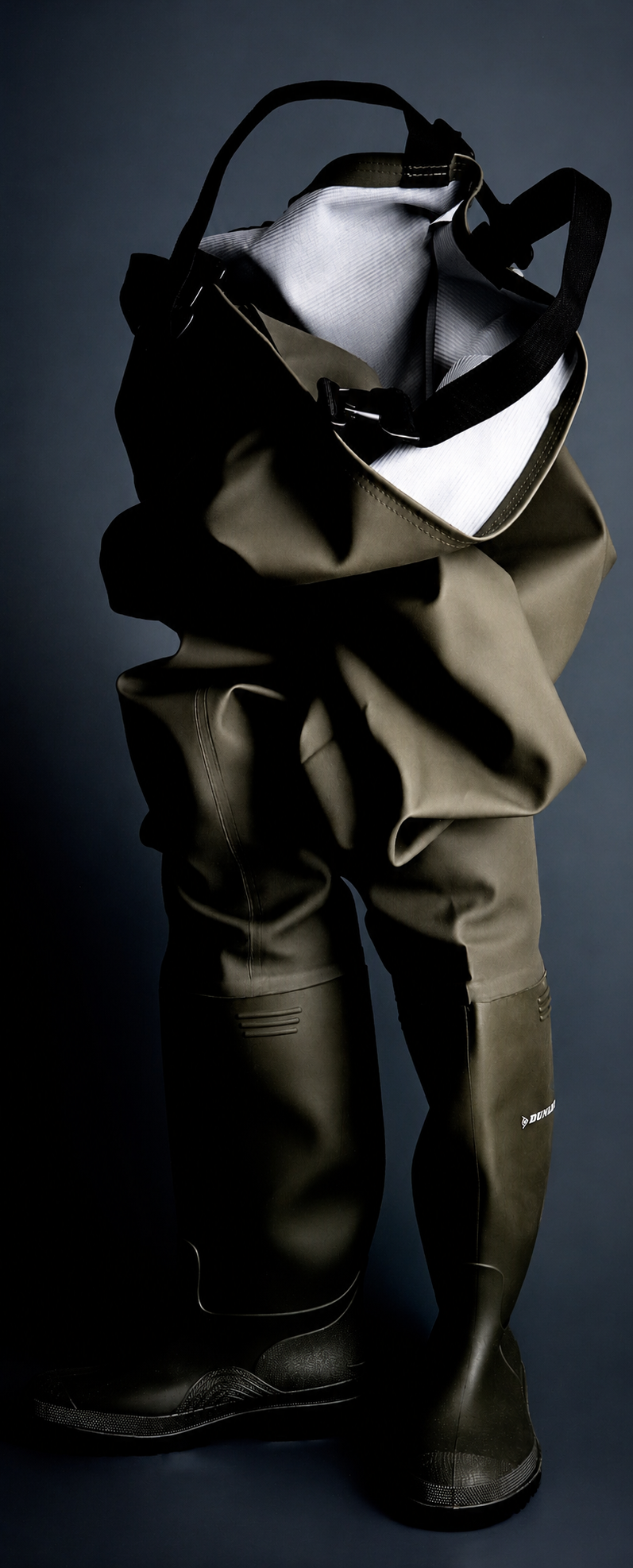
Dunlop Waders_ Waterproof apparel is typically constructed from PVC-coated PET. For applications that require a high degree of stretch and recovery PVC is is combined with an elastomer textile, such as TPU (elastane). The seams are stitched and welded to keep the water out. The compression-molded boots are welded to the legs. The least expensive examples utilize PVC. PU boots are used in combination with PVC legs where higher performance is required - it is lighter and longer-lasting, and remains more flexible in cold water. The material Sourcebook for Design Professionals_ P.129
The success of Polyvinyl Chloride in products and industrial parts is partially due to the range of physical properties that can be achieved at a relatively low cost and its compatibility with a broad range of manufacturing processes.
Dip molding is used to shape hollow open-ended items in a single piece, such as a rubber glove.
Rotation molding is used to produce completely sealed parts without any openings, such as inflatable fender cushioning for boats.
Sheet PVC can be welded and inflated such as in an inflatable mattress.
PVC is polar meaning it contains molecules in which the electrons are distributed asymmetrically (unevenly). As a result the molecule will have a positive and negative pole. Areas of polarity will oscillate when exposed to an electric field of high-frequency electromagnetic energy. A property utilized in Radio Frequency (RF) Welding: a plastic joining technique, which causes the molecules to oscillate rapidly, plasticize and mix at the joint interface.
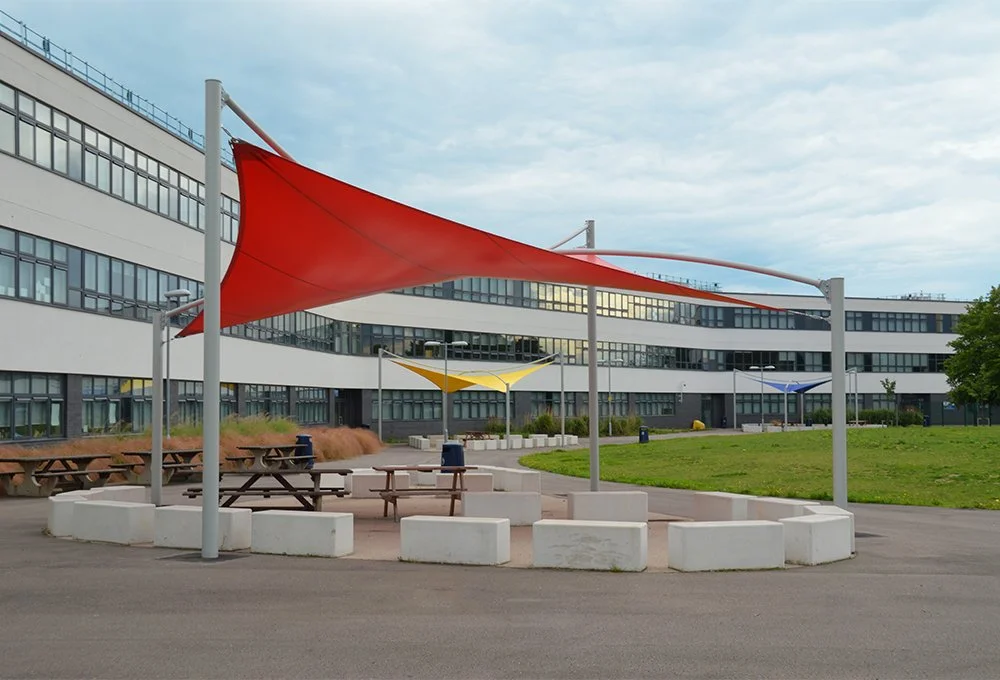
Orion Hypar PVC Tensile Structure_ The PVC sheet takes colour very well and the range offers 25 different colours
Rigid extrusion is used in producing pipes, window parts and flooring, inflatables and tensile structures.
PVC coating is applied onto fabrics and windows to improve their lifespan and the surfaces brighter and cleaner for longer. PVC coated textiles are a composite that combines the strength and dimensional stability of fibres with the elasticity and surface resistance of PVC. However, is non-breathable.
As PVC is a thermoplastic adhesive bonding can be used to create a strong, airtight bond between two panels.
uPVC (rigid) has excellent thermoforming characteristics, it shapes into trays, inserts and blister pack bases.
Decals on cars and exhibition walls is cut from thin PVC sheets, ranging from 0.8 to 0.08mm in thickness.
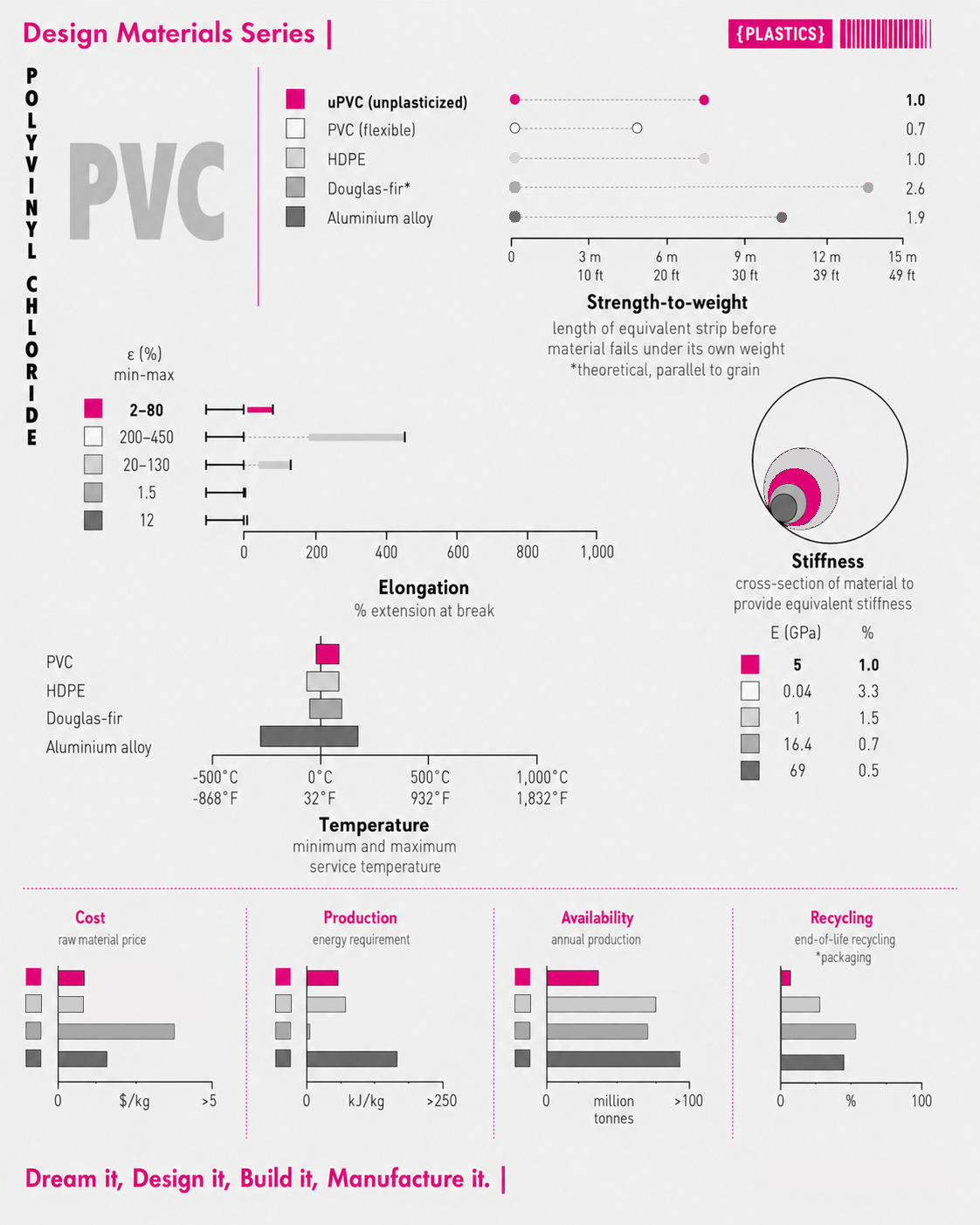
Polyvinyl Chloride (PVC) Datasheet_ The Materials Sourcebook for Design Professionals P. 152_ Colours & Layout edited by Tomás Agnew
Costs per KG:
Manufacturing Level: 10,000 kg of PVC resin powder: €1.04 /kg. PVC Compound Product on Alibaba.com
Initial Batch to Market Testing: 25kg bag of EU sourced PVC Powder: €13.26/kg PVC Powder Polyvinyl Chloride ( PCV ) Fine Dust
Prototyping Stage: 750g of 3D Printing filament spool: €42.00 Vinyl 303 "Natural" Therefore: €52.50 / kg
Sources / Further Reading:
Chris Lefteri, Materials for Design. P146-147 Link to book: Materials for Design - Chris Lefteri - 978178067344, Link to Chris Lefteri’s website, where you can find interesting articles and further research: CMF Industry-Leading Material Reports | Chris Lefteri Design — Chris Lefteri Design
Rob Thompson, The Materials Sourcebook for Design Professionals. P152-163 Link to book: The Materials Sourcebook for Design Professionals - Rob Thompson - 9780500518540
ORION Hypar Fabric Canopies - Tensile Structures
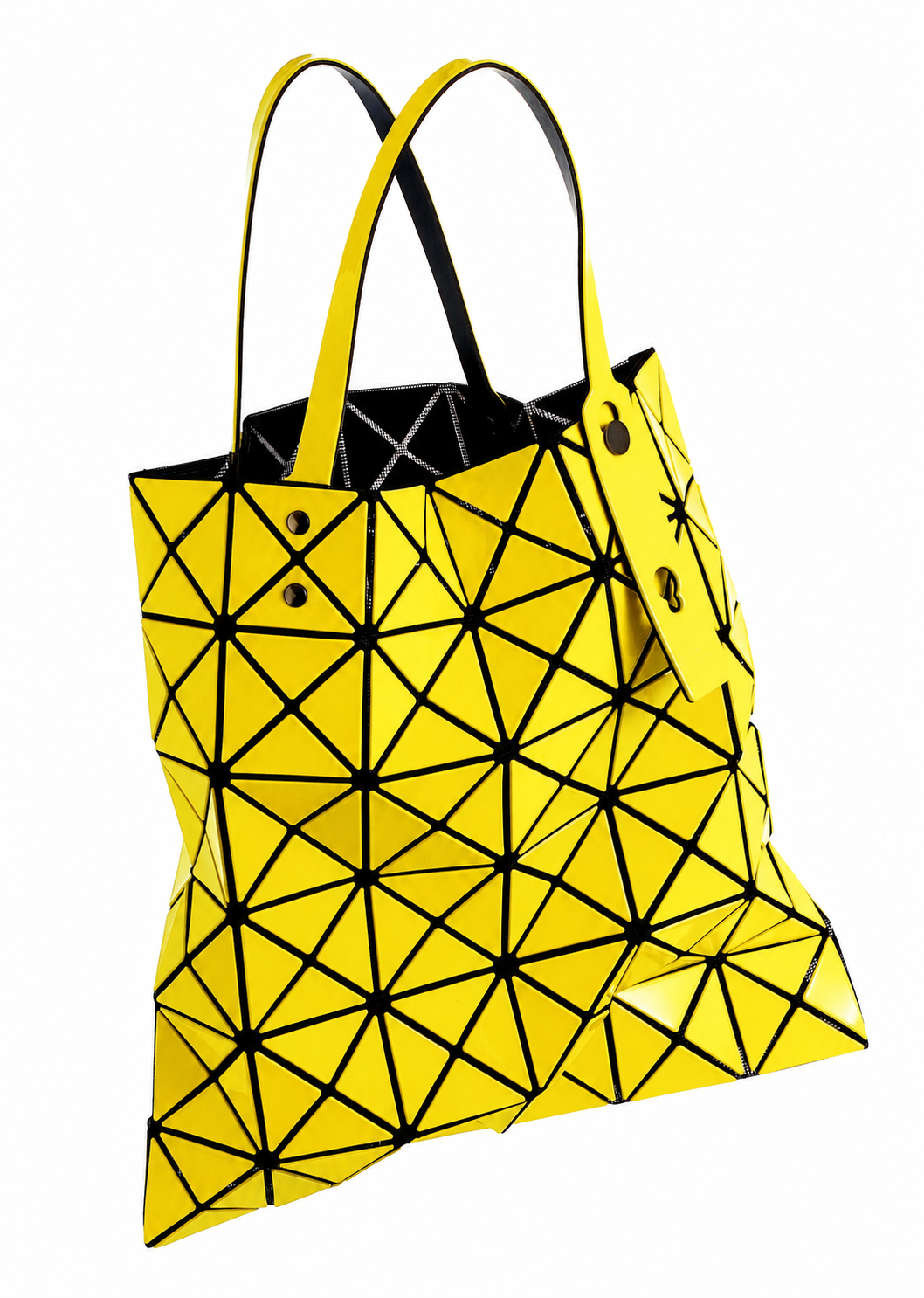
PVC-Clad tote shopper bag_ designed by Issey Miyake and made of triangular plates of PVC clad onto a PET underlayer. It gives a glossy finish and takes vivid colour. The Material Sourcebook for Design Professionals_ P123
Curious to see if PVC is right the right material for your product? Team Human can guide you and explain PVC’s material benefits and pitfalls in prototyping, product development, and manufacturing decisions from our studio based in Wicklow, Ireland. Contact Team Human at info@teamhuman.ie.
#TeamHuman #ProductDesign #IndustrialDesign #MaterialDesign #PVC #PolyvinylChloride #Thermoplastic #Amorphous #PackagingDesign #ConstructionMaterials #uPVC #PVCTextiles #PVCPackaging #PETG #APET #CPET #MaterialResearch #CMFDesign #FurnitureDesign #TextileDesign #ProductDevelopment #Prototyping #DesignForRecycling #PackagingInnovation #MadeInIreland #Ireland #Wicklow