
Designing for (ethical) User Engagement
In the world of design, an affordance is a visual cue that tells you what an object does, like a door handle that begs to be pulled. When a product is unintuitive, it’s usually because the designer is focusing on aesthetic form rather than function and how it communicates. At Team Human, we believe that the best kind of user engagement is about creating a beneficial, intuitive, seamless relationship between a person and a product.
For that to be possible, design decisions must first be rooted in Human Rights with special consideration for personal privacy and agency, while remaining commercially transparent.
The next consideration is Human Effort, is it functional, reliable, usable? Humans are lazy, easily bored, and distracted, so a product must do what it claims to do, and it should perform consistently, over and over again, building trust, while at the same time being easy to use and forgiving.
The Human Experience, delight, and aesthetics are the final design considerations, the icing on the cake. The aesthetic usability effect states that users perceive attractive designs as easier to use, whether they actually are or not. Good design should empower the user to do things better than they previously could, to become proficient. Proficiency leads to innovation and creativity; the product may be used to create and explore areas that extend both the design and the person using the design.
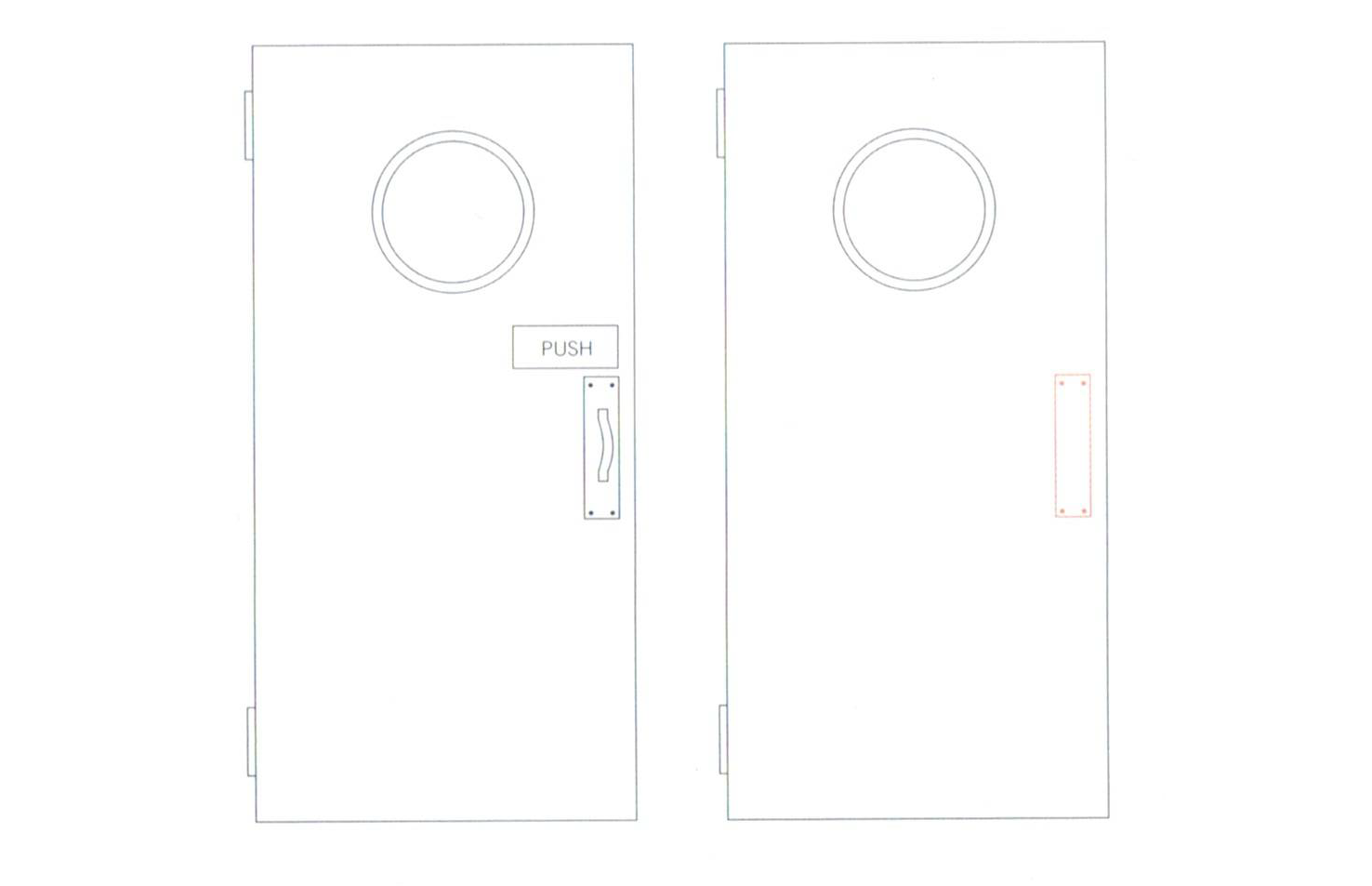
Can you tell which door has been designed with good affordance in mind? On the left, the “push” affordance of the door is knowable only because of the sign, which conflicts with the powerful “pull” affordance of the handle. By replacing the handle with a flat push plate, the conflict is eliminated, rendering the sign as excessive and unnecessary. Sourced from the Universal Principles of Design_ P.23
In the UI/UX space, the Center for Humane Technology advocates for a shift away from “attention extraction towards societal well-being. This means avoiding and rejecting “deceptive patterns” that manipulate users into actions they didn’t intend. Infinite Doom-scrolling, Confirm-shaming, Fake Urgency, and Roach Motel (easy to sign up, but nearly impossible to cancel) designs do not respect humans’ ethical hierarchy of needs. These set-ups do not generate loyalty in the long run and frustrate the user base.
According to Don Norman, to create a holistic experience, design must address three cognitive and emotional levels:
Visceral: The initial emotional processing that occurs when you first encounter a product. Subconscious and instinctive, driven by visual appearance and tactile sensation. Important for positive initial engagement.
Behavioural: The product’s usability and user satisfaction determine whether users find solutions genuinely helpful and whether they’ll continue to use the product.
Reflective: The conscious thought, interpretation, and reasoning that happens as a user considers the product’s impact on their lives, evaluating features, meaning, and cultural implications.
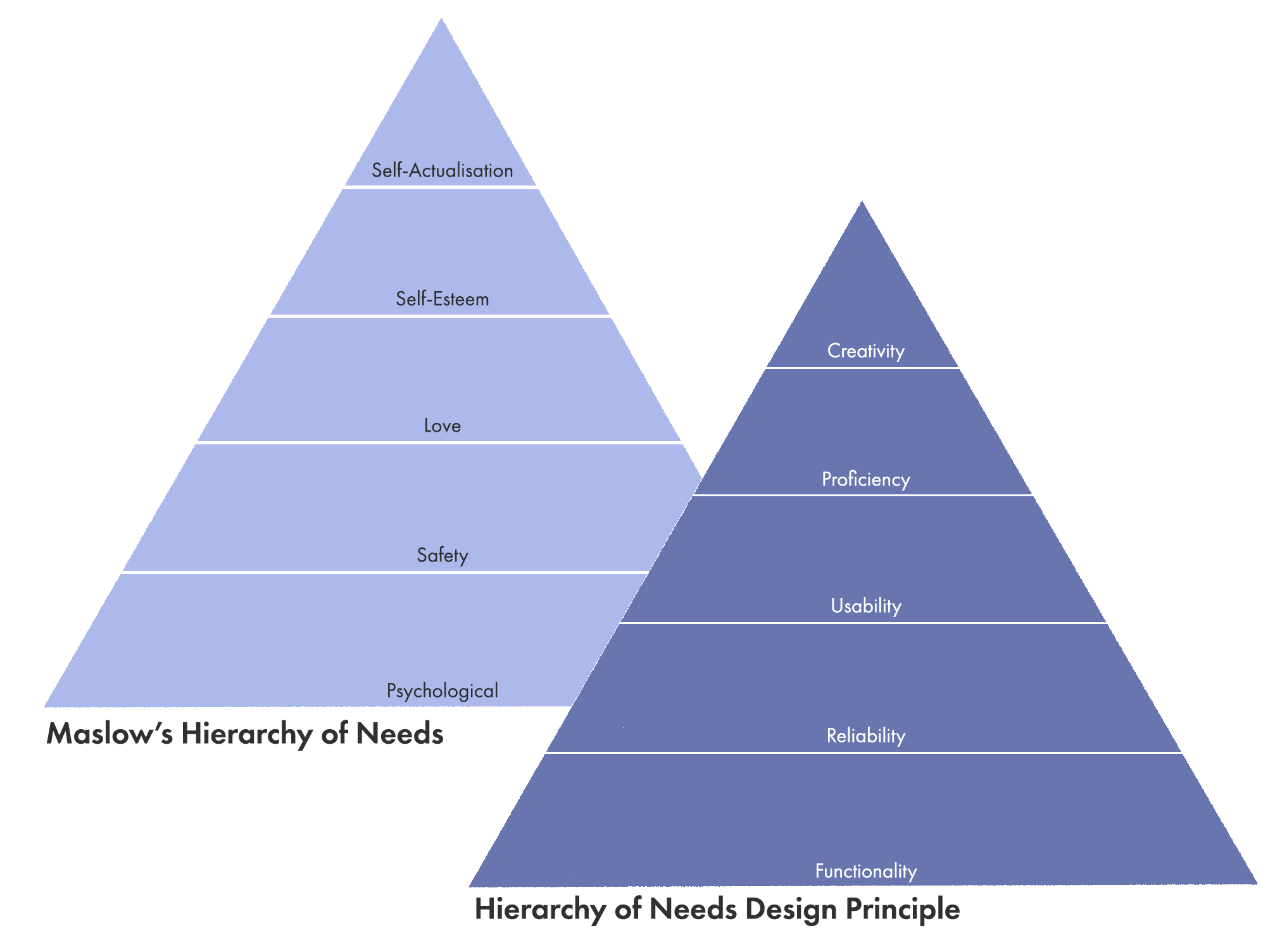
The hierarchy of needs specifies that a design must address lower-level needs before higher-level needs can be addressed. Higher levels in the hierarchy correspond to higher levels of perceived value. Sourced from Universal Principles of Design_ P. 125
The Psychological Mechanics of Interaction:
The Motivation-Ability-Trigger Framework (Fogg Model) states that engagement occurs when a user has sufficient motivation, the ability to complete the task with minimal effort, a timely prompt, or a trigger.
Deep vs. Shallow Gamification: Effective gamification goes beyond points and badges (shallow), it aims to tap into intrinsic motivators like meaning (feeling part of something bigger), autonomy, and social influence. True gamification strikes a balance between challenge and achievability; if it’s too easy, users get bored, and if it’s too difficult, they quit.
Designers must balance information richness with Cognitive Load Management. Techniques like chunking and progressive disclosure help manage the user’s mental effort.
Feedback Loops create a cycle where user actions lead to system responses. Positive feedback loops amplify output and can drive growth or change, but often result in unintended negative consequences. Negative feedback loops stabilise systems and resist change.
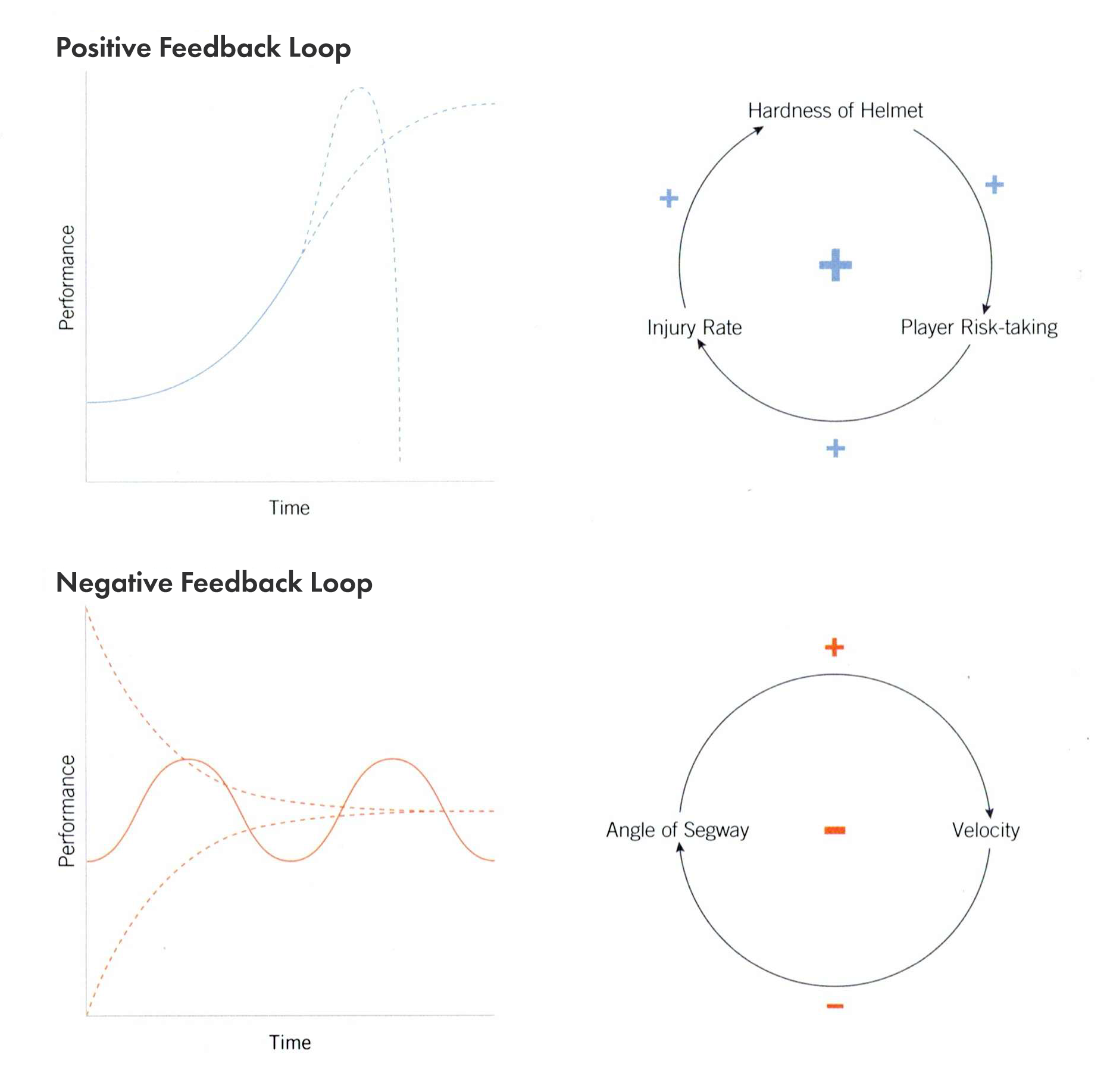
(Top) An example of a Positive Feedback Loop with negative consequences: In response to head and neck injuries in American Football, designers created plastic helmets with internal padding to replace leather helmets. The helmets provided greater protection but induced players to take greater risks when tackling. More head and neck injuries occurred than before.
(Bottom)An example of a Negative Feedback Loop with stabilising consequences: Balancing a Segway and its rider. As a rider leans forward or backward, the Segway accelerates or decelerates to keep the system in equilibrium. Sourced from the Universal Principles of Design_ P. 93
With all that kept in consideration, Team Human starts the process of understanding and personal respect for the user with deep research. This can include interviews, observation, competitor reviews, user journey mapping, ethnographic studies, and workshops. Journey mapping helps teams visualise what a person goes through to achieve a goal, including actions, thoughts, emotions, and opportunities for improvement.
Then we create and test. Early sketches, mock-ups, wireframes, prototypes, or service flows allow us to see how people actually respond before a major investment is made. Usability testing is useful because it reveals problems, opportunities, and real user behaviour that design teams may not predict on their own.
Trying to increase engagement by adding more features, more notifications, or more visual noise is often a mistake. It may generate activity, but not necessarily value. Strong engagement usually comes from clarity, usefulness, feedback, trust, accessibility, and a product that fits naturally into a person’s behaviour.
The goal is not to force people to engage. The goal is to design something worth engaging with.
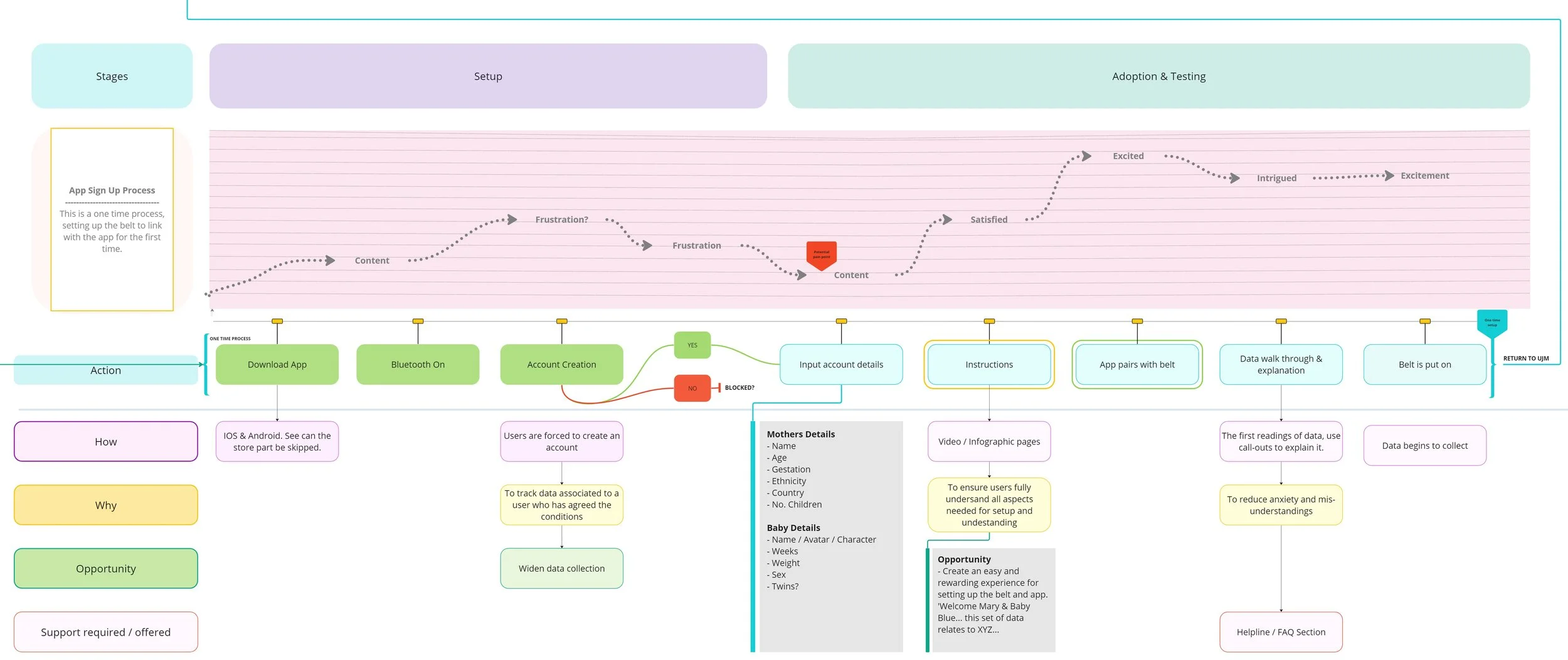
User Journey Map: the diagrammatic artifact generated through an ethnographic study. It is a visual representation of a research methodology based on observing people in their natural environment, rather than in a formal research setting.
Sources / Further Reading:
Nielsen Norman Group - The Definition of User Experience (UX),on how the users’ experience encompasses all aspects of the end-user's interaction with the company, its services, and its products.
Nielsen Norman Group - The Changing Role of the Designer: Practical Human-Centered Design,Video on Human-Centered Design.
Nielsen Norman Group - Journey Mapping 101, A deep guide on different types of research mapping practices.
Nielsen Norman Group - User Interviews 101, A comprehensive guide on how to conduct user interviews.
Lidwell, W. Holden, K Butler, J. Universal Principles of Design (2010) Link to free learning resource.
Milton, A. & Rodgers, P. Research Methods for Product Design, Link to Perlego, a subscription service for educational books: Perlego
Center for Humane Technology,Resource on how to transform the incentives that drive our technology.
Fogg Behaviour Model,Resource highlighting the three elements required for behaviour change to occur.
Do you have a product, prototype, service, or digital experience that you want people to engage with ethically? Team Human can help you understand your users’ behaviour, test assumptions, and design clearer, more useful experiences before you invest further in development. Get in touch to explore how better user engagement can support better product decisions.
Contact us today at info@teamhuman.ie or visit our website www.teamhuman.ie to explore how we can help you.
Based in Wicklow, Ireland, Team Human is a leading product design and innovation consultancy. Our expertise spans industrial design, medical devices, and more. Join us on this exciting journey of innovation, and let's shape a better future together.
#ProductDesign #UserEngagement #UXDesign #UIDesign #HumanCentredDesign #UserResearch #UsabilityTesting #DesignThinking #ProductDevelopment #Prototyping #IndustrialDesign #ServiceDesign #TeamHuman #IrishDesign