
Steel: From Everyday Products to Long-Life Engineering
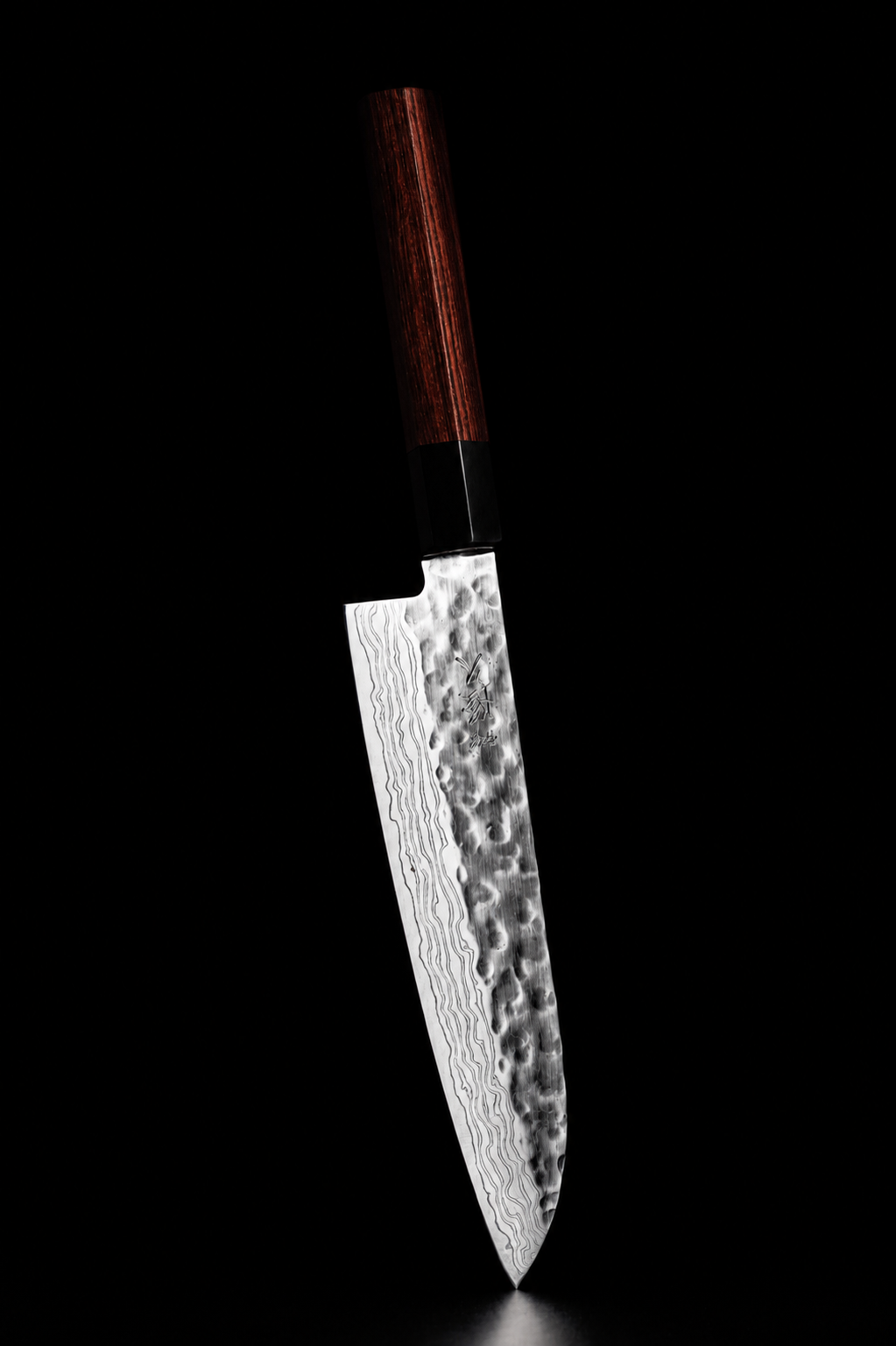
Laminated-Steel Santoku Knife_ Thin sheets of stainless steel - one sheet with more carbon and another with less, to make it softer - are folded together in alternating layers to create a flexible and very hard blade. The highest-quality modern kitchen knife blades consist of 60 or so layers. Japanese Samurai swords often consist of up to two million layers. Sourced from “The material Sourcebook for Design Professionals,” P. 28-29.
Steel is strong, ferrous (magnetic), widely available, repairable, and straightforward to manufacture. Stainless steel keeps many of those benefits but adds corrosion resistance and a cleaner, more durable surface. The trade-off is higher cost and tougher processing.
Steel is just iron alloyed with carbon. Change the carbon content, and you change the balance between toughness, hardness, ductility, and wear resistance. Mild steel is low carbon, relatively cheap, and easy to form. Higher-carbon steels get harder and better at holding an edge, but less forgiving. Stainless steel is still steel, but is alloyed with about 10.5–11% chromium (sometimes more), which forms a passive surface film that slows rusting; nickel, molybdenum, and other elements are then used to tune toughness, formability, and corrosion resistance.
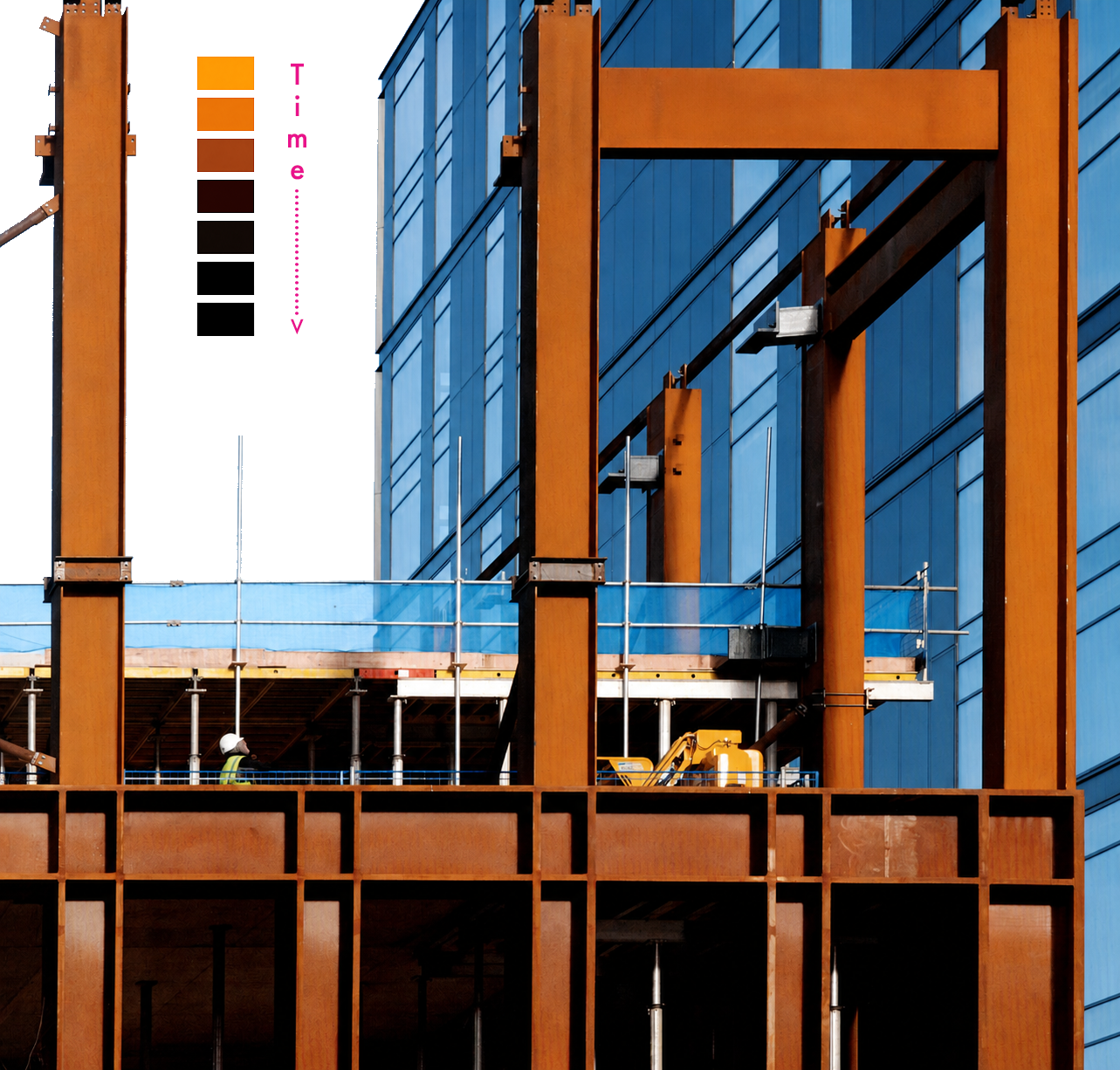
Weathering Cycle of High-Strength-Low-Alloy (HSLA) Steel_ Unlike unalloyed steel, the oxide that develops on this particular HSLA steel (commercially known as “COR-TEN Steel”) acts to protect the surface. It adheres firmly to the base material, preventing further corrosion. HSLA Steel has a carbon content between 0.05 and 0.25% and is alloyed with elements such as vanadium, niobium, titanium, and copper, which results in a durable rust-like appearance when exposed to the atmosphere. Unlike the iron oxide that develops on the surface of carbon steel, the layer of patina does not flake. Sourced from “The Material Sourcebook for Design Professionals,” P. 30-31.
Choosing the right steel is a question of context. Carbon or mild steel makes sense when you need stiffness, weldability, and low material cost. It is often used in hidden structures such as frames, brackets, furniture, enclosures, tools, structural parts, and transport components. Galvanised steel uses a zinc layer to protect ordinary steel outdoors.
Tool steel is used for parts exposed to a high degree of wear, such as drill bits, cutters, and sharp edges. There are different grades, each of which is suited to a specific use type. See the chart below for further details.
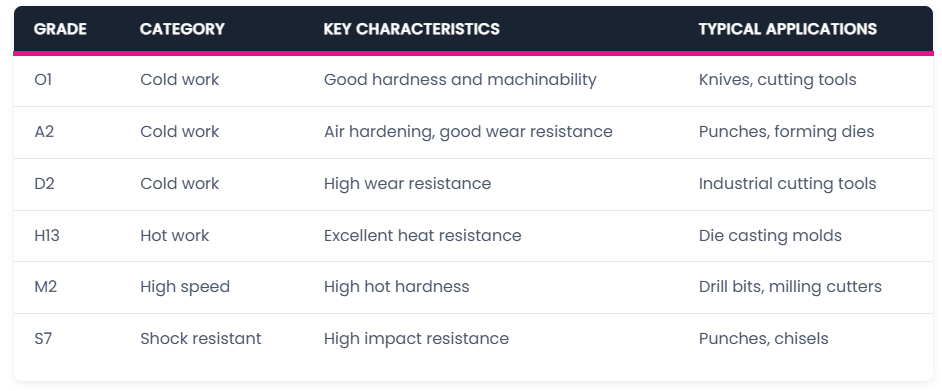
Tool Steel Grade Chart_Souced from Manufyn Tool Steel Guide: Types, Grades, Heat Treatment and Uses
Stainless steel is used when users touch the surface of the object often for cleaning, or if it’s exposed to heat, weather, or chemicals. It is used in appliances, medical devices, food equipment, sinks, cookware, fasteners, and architectural details. As a quick rule of thumb, 304 is the general-purpose stainless; 316 costs more but is the safer choice for environments that include chlorides, coastal air, or where harsh washdown conditions are required.
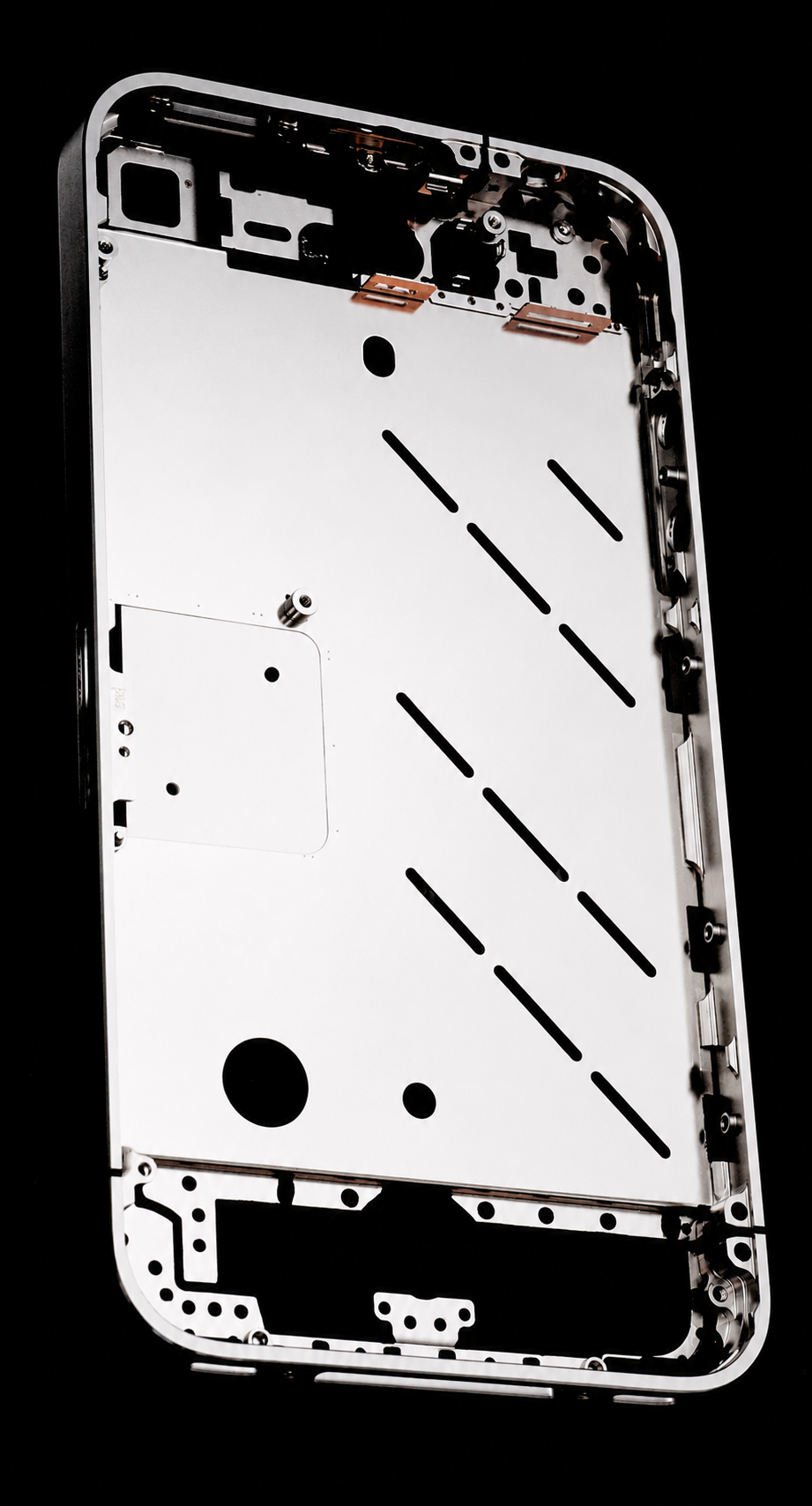
Stainless-Steel Phone Chassis_ The bezel (grooved frame) and chassis of the iPhone 4 are combined to produce a durable and elegant product that uses the minimum number of parts. First, the stainless-steel bezel is forged and machined to shape. An etched stainless-steel plate is laser-welded with the utmost precision to hold the bezel in place and provide a surface on which the internal componentry can be mounted. Once assembled, the gaps (essential for the performance of the antenna) are over-molded with plastic. Sourced from “The Material Sourcebook for Design Professionals,” P. 32-33.
The steel manufacturing process is part of the material decision; you don’t just specify the steel type. The finish and the manufacturing technique will have a massive impact on the final product.
Mild steel is good for stamping, bending, roll forming, welding, and powder coating. Stainless can also be folded, forged, deep drawn, and polished, but it is tougher on tooling, and standard grades can be harder to machine.
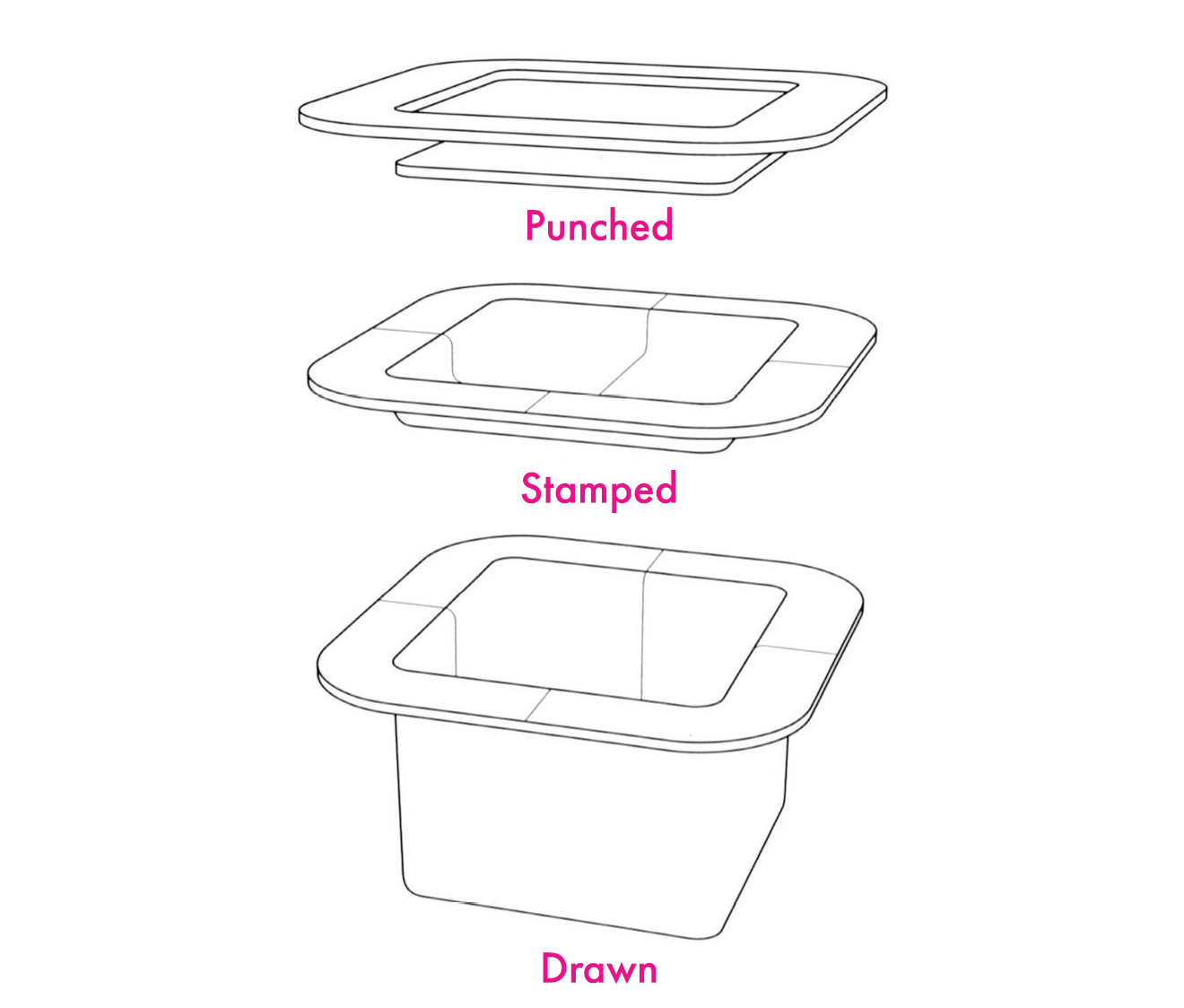
Metal Pressing_ Sheet metal is shaped into a range of mass-produced products by punching, stamping, and drawing.
With stainless steel, post-fabrication cleaning, passivation, or electropolishing will be specified because corrosion resistance depends highly on the condition of the chromium-rich passive film. Brushed or polished stainless steel finishes can look premium, but thin parts will show scratches and dents quickly in real use.

Punched, Stamped & Polished Stainless-Steel Alessi Super Star TK03 Bowl_ Sourced from “Materials for Design,” P.199
Because steel is magnetic, it is easy to recover, widely reused, and widely recycled. Worldsteel says around 680 million tonnesof steel were recycled in 2021, avoiding the emission of more than one billion tonnes of CO₂, and it is estimated that around 80%of steel is recycled globally. Stainless steel also performs well over a long life because it needs very little maintenance compared with other materials.
However, primary production still needs a great deal of heat (energy), and stainless steel requires alloying, another high-energy, intensive process. The better design move is to use only as much material as needed, design for disassembly, favour repairable joints where possible, and choose stainless only when the service environment truly justifies it over coated carbon steel.
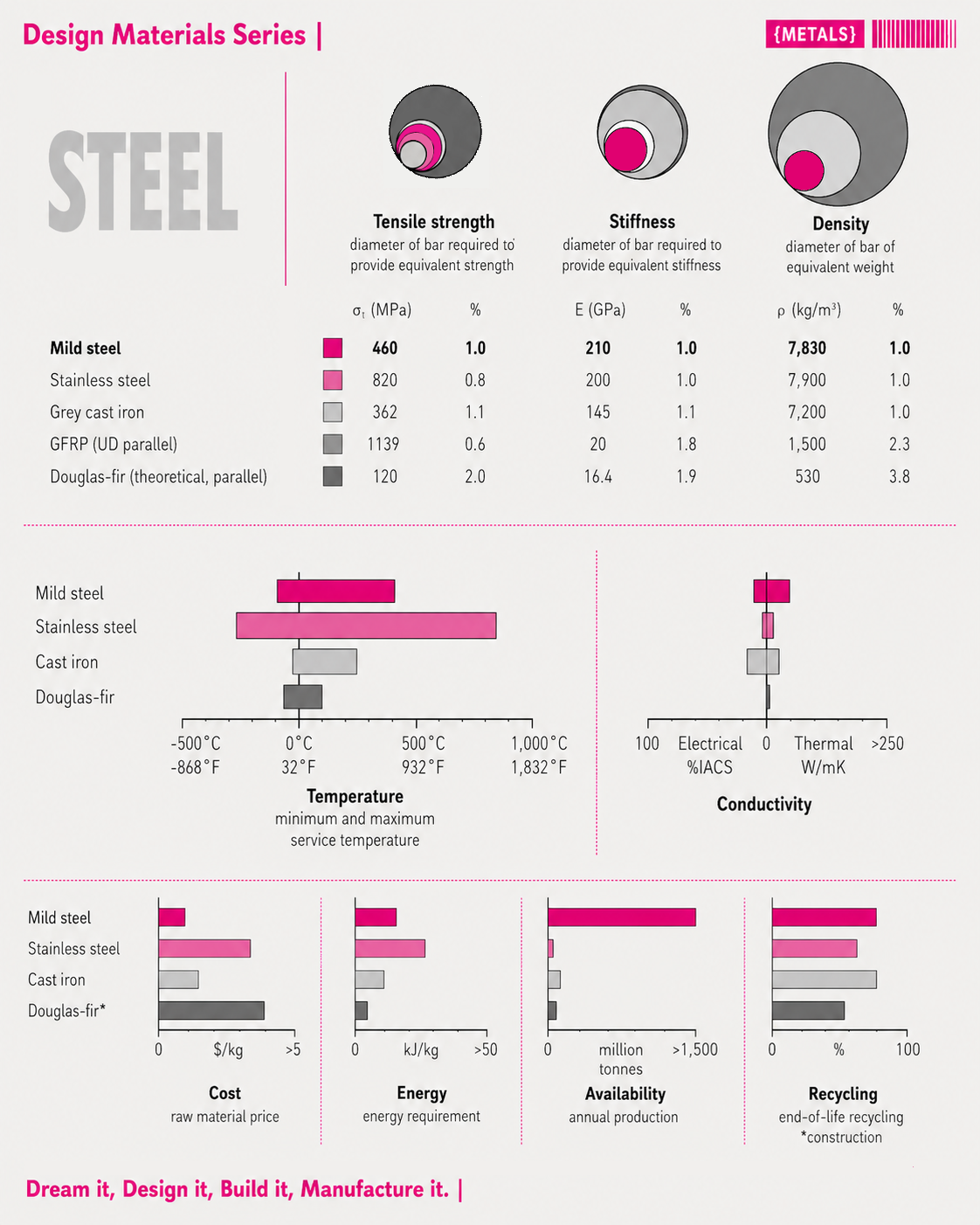
Mild Steel & Stainless-Steel Datasheet_ The Materials Sourcebook for Design Professionals P. 28_ Colours & Layout edited by Tomás Agnew
Costs per KG:
When it comes to metals, costs are hard to estimate because grade, form, finish, quantity, and alloy surcharges move constantly, so live supplier quotes are essential. However, in general, plain steel is cheap, and stainless is several times dearer.
For small-batch buying, cut-to-size parts from one UK supplier (quoted June 2026) work out at:
€3.6/kg for mild steel
€6.4/kg for galvanised steel
€12.7/kg for 304 stainless
€22.5/kg for 316 stainless.
Those figures are useful for estimating prototyping costs, but are not manufacturing-level prices; each factory will negotiate and price every job individually.
Sources / Further Reading:
Chris Lefteri, Materials for Design. P198-201 Link to book: Materials for Design - Chris Lefteri - 978178067344
Rob Thompson, The Materials Sourcebook for Design Professionals. P28-41 Link to book: The Materials Sourcebook for Design Professionals - Rob Thompson - 9780500518540
Tool Steel Grades: A Comprehensive Guide - MFG Shop
Worldstainless: Environment and sustainability
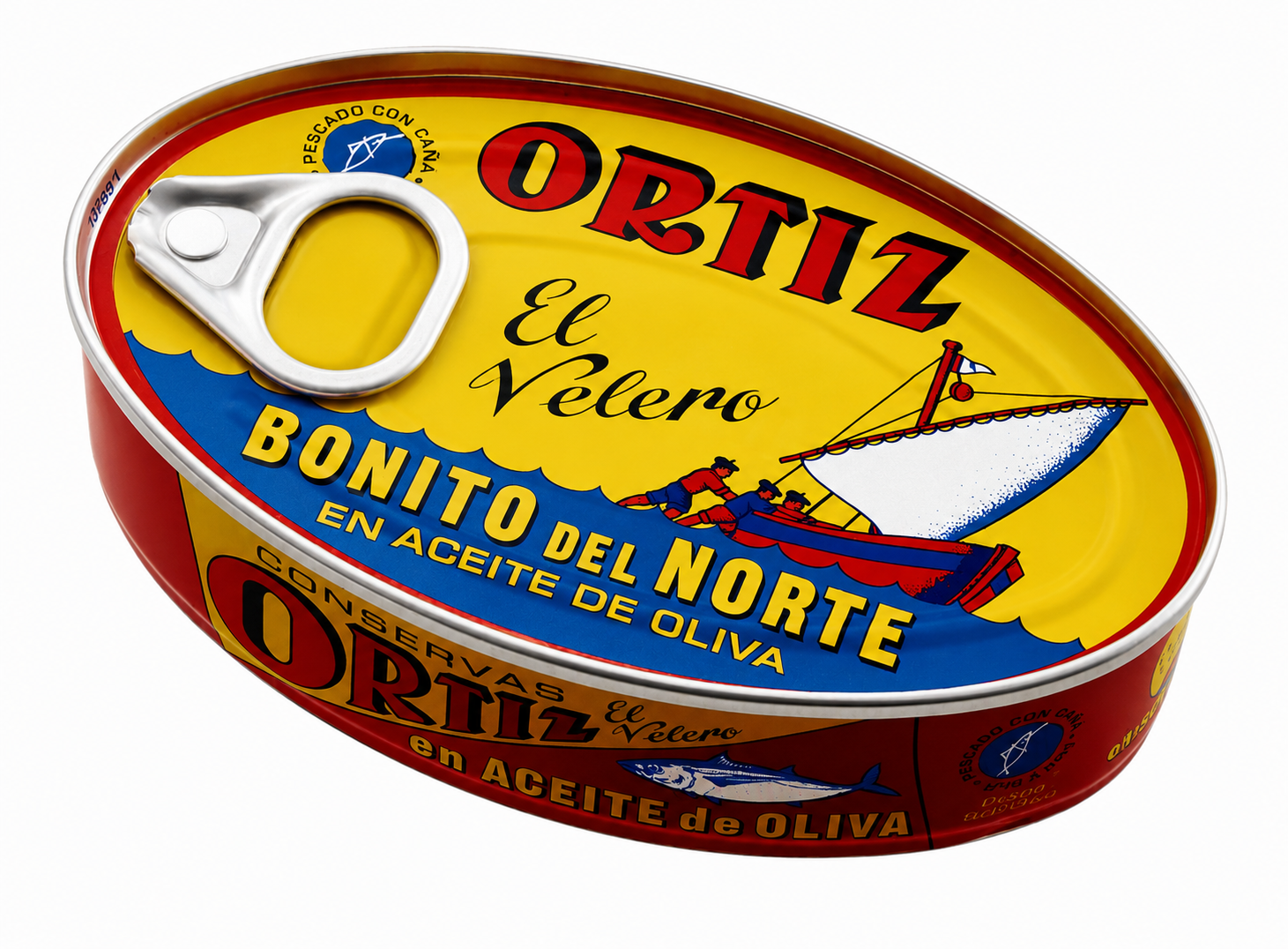
Tinplate Packaging_ Steel is printed in sheet form before pressing. The surface is coated with film to protect the graphics from contact with the metal press. Steel packaging is suitable for embossing and debossing. There is very little spring back with steel, so precise and intricate designs are straightforward to reproduce and will hold their shape. The ridges and bends improve the rigidity and usability of the packaging, which in turn helps to reduce weight. Sourced from “The Material Sourcebook for Design Professionals,” P. 36
If you are developing a product, refining a prototype, or trying to balance cost, durability, finish and manufacturability, Team Human can help with material selection, prototyping, CMF direction and design-for-manufacture decisions that hold up in real use. Contact Team Human at info@teamhuman.ie.
#TeamHuman #ProductDesign #IndustrialDesign #MaterialDesign #Steel #Stainless-steel #GalvanizedSteel #HSLASteel #PackagingDesign #ConstructionMaterials #Laminated-Steel #MaterialResearch #CMFDesign #FurnitureDesign #TextileDesign #ProductDevelopment #Prototyping #DesignForRecycling #PackagingInnovation #MadeInIreland #Ireland #Wicklow