
Materials Research: Choosing the Right Materials
Good product design isn’t about choosing a material because it looks good on a sample swatch. Materials research is about understanding how a material performs, how it feels, how it is made, and what it communicates to the person using it.
At Team Human, this stage begins with the product itself. What does it need to do? Does it need to be rigid, lightweight, impact-resistant, food-safe, weatherproof, repairable or cost-efficient? A material is never chosen in isolation. It has to serve the product’s function, the manufacturing process and the user experience all at once.
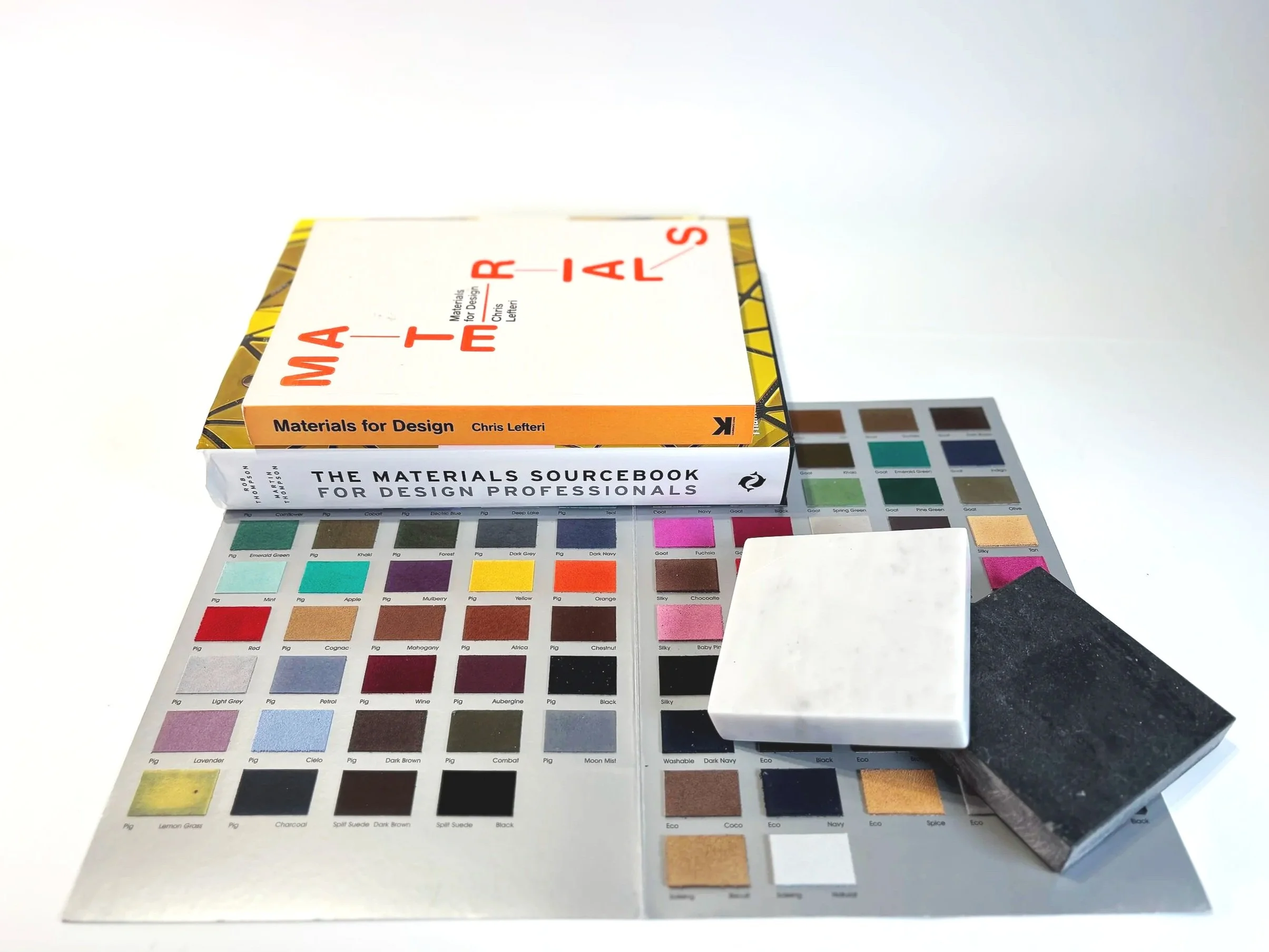
One-to-one material consultations to ensure the best product fit
We look more widely at the material landscape. That means comparing options not only by their technical properties, but also by finish, tactility, durability and the human experience of perceived quality. The same product can feel disposable, premium, warm or clinical depending on the material choices behind it. Materials become part of the experience, not just the construction.
We also look at the production reality of candidate materials. Can they be machined, moulded, folded, welded, printed, assembled, or finished efficiently? Do they make sense for early prototyping as well as future scale-up? Sometimes the right material on paper becomes the wrong one once tooling cost, lead time, waste or assembly complexity are taken into account.
An important part of this process is thinking beyond the object itself. A good materials decision should not only solve the need of the product today, but also make sense over time. That means considering how a material ages, how long it lasts, whether it can be repaired, reused, separated or recycled, and what kind of impact it creates beyond the first sale.
The goal of materials research is not to find the most exotic material. It is to find the most appropriate one. When done well, it helps create products that work better, feel right, and make more sense for users, manufacturers and the wider world.
Interested in developing a product with the right balance of performance, manufacturability and user experience? Get in touch with Team Human.
Sources / Further Reading:
Chris Lefteri, Materials for Design. Link to book: Materials for Design - Chris Lefteri - 978178067344, Link to Chris Lefteri’s website where you can find interesting articles and further research: CMF Industry-Leading Material Reports | Chris Lefteri Design — Chris Lefteri Design
Rob Thompson, The Materials Sourcebook for Design Professionals. Link to book: The Materials Sourcebook for Design Professionals - Rob Thompson - 9780500518540
Christian Bason and Jens Martin Skibsted, EXPAND: Stretching the Future by Design. Link to book website: Expand – Stretching the future by design
Ellen MacArthur Foundation. Circular economy principles: Circular Design Meaning, Definition & Role | Ellen MacArthur Foundation, Visualising the circular economy: Butterfly Diagram | Circular Economy Infographic | Ellen MacArthur Foundation
Contact us today at info@teamhuman.ie or on our website www.teamhuman.ie
Team Human is a Product design and innovation consultancy based in Wicklow,
Ireland. Team Human can create prototypes of varying levels depending on project
requirements and budget from rapid foam models to slick high-end demo products.
#TeamHuman#ProductDesign#MaterialsResearch #DesignProccess #DesignLearning #DesignBlog #DesignSeries #DesignInnovation#Ireland#Dublin#Wicklow#IndustrialDesign #Innovation#DesignAgency#DesignThinking#3DPrint#Workshop#Prototype#RapidPrototyping#Design#IrishDesign#SketchModel#Startup#SupportLocal#Technology#Advancement#Realize#Idea#DesignerMaker#Product#DesignLeaders