
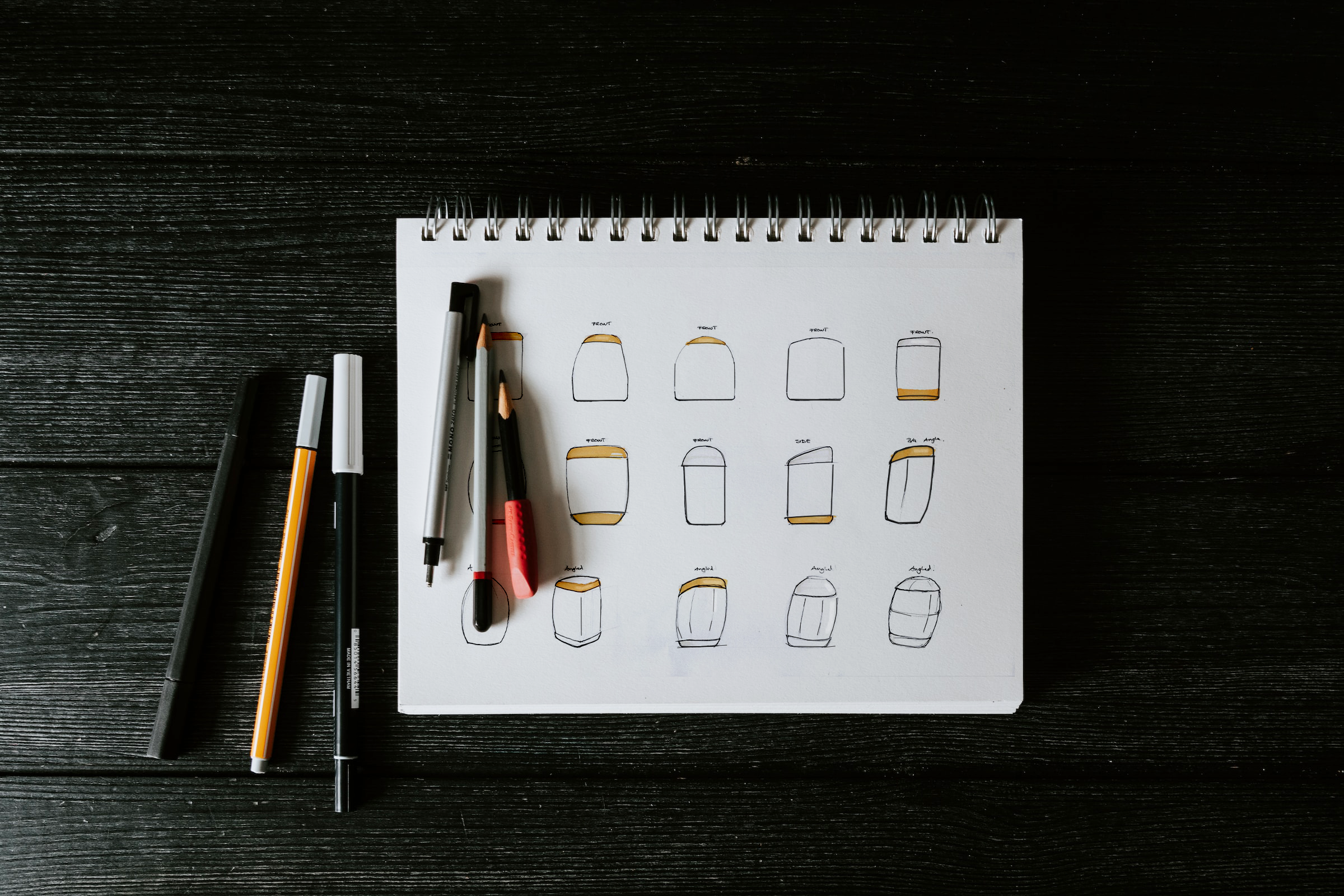
Fast and loose thumbnail sketches - An early exploration of shape and form.
We sketch first because early design is about exploration, not polish. A rough page of thumbnail sketches lets us compare several ideas quickly, test proportions, spot awkward layouts and ask simple but important questions: where does the hand go, what tells someone to press or pull, what might confuse them, and what might lead to error?
Sketching helps designers externalise thoughts, reinterpret what they see, and move laterally between alternatives rather than locking too early into one answer. That is why a useful sketch does not need to look finished. It needs to be clear enough to think with.
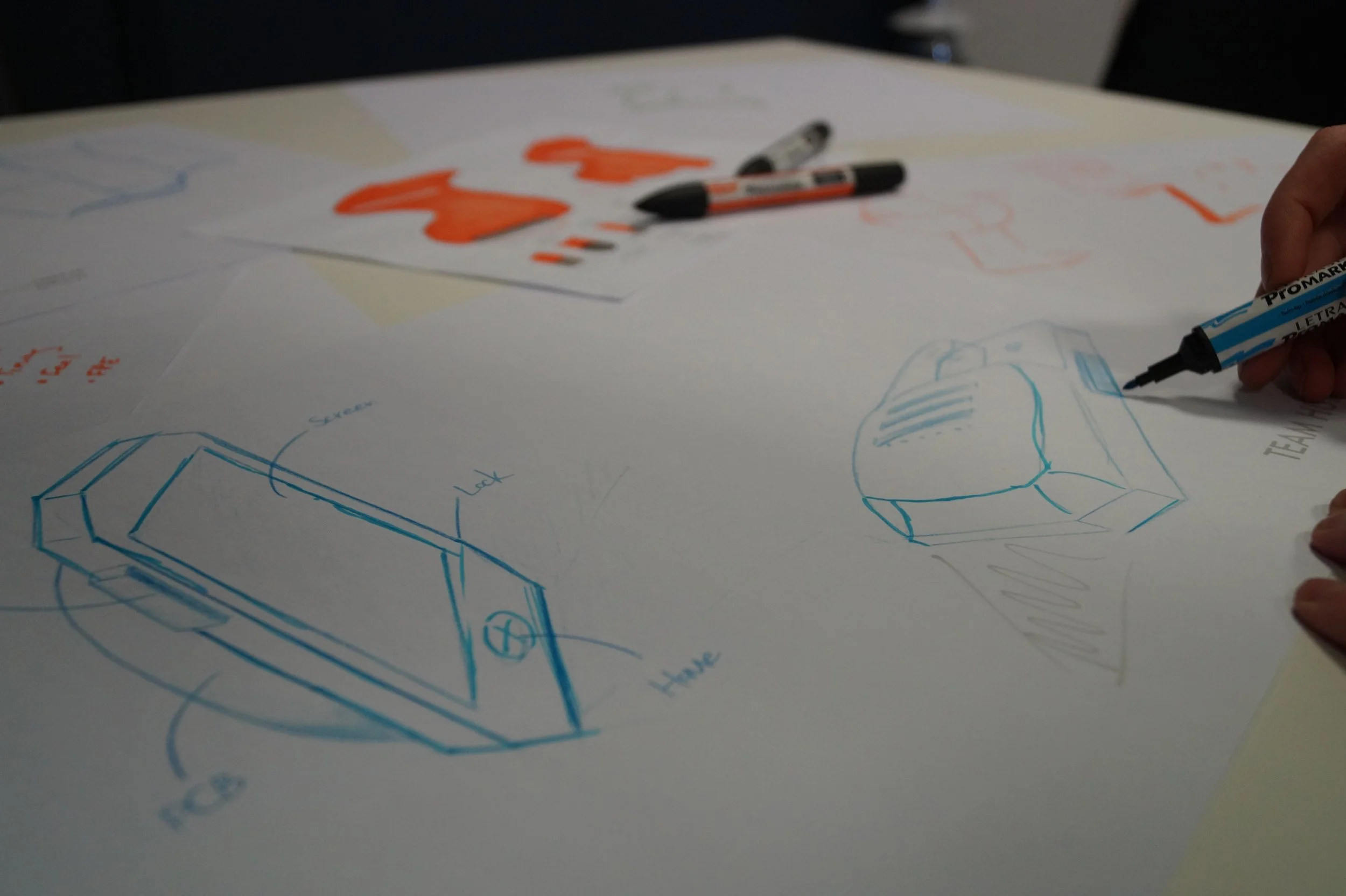
Early concept sketches - For exploring ideas and for generating discussion points that can be tackled and worked through with deductive reasoning and design thinking.
After rapid thumbnail sketches to start up the design process, we then develop the more promising directions with additional views, notes and closer attention to use, construction and component arrangement.
We review those concepts with clients and stakeholders, compare them against agreed criteria, and then create initial renders for the selected ideas so the discussion becomes more concrete. Those renders are not final visuals; they are working images that help everyone react to the same thing and define the next development steps with more confidence.
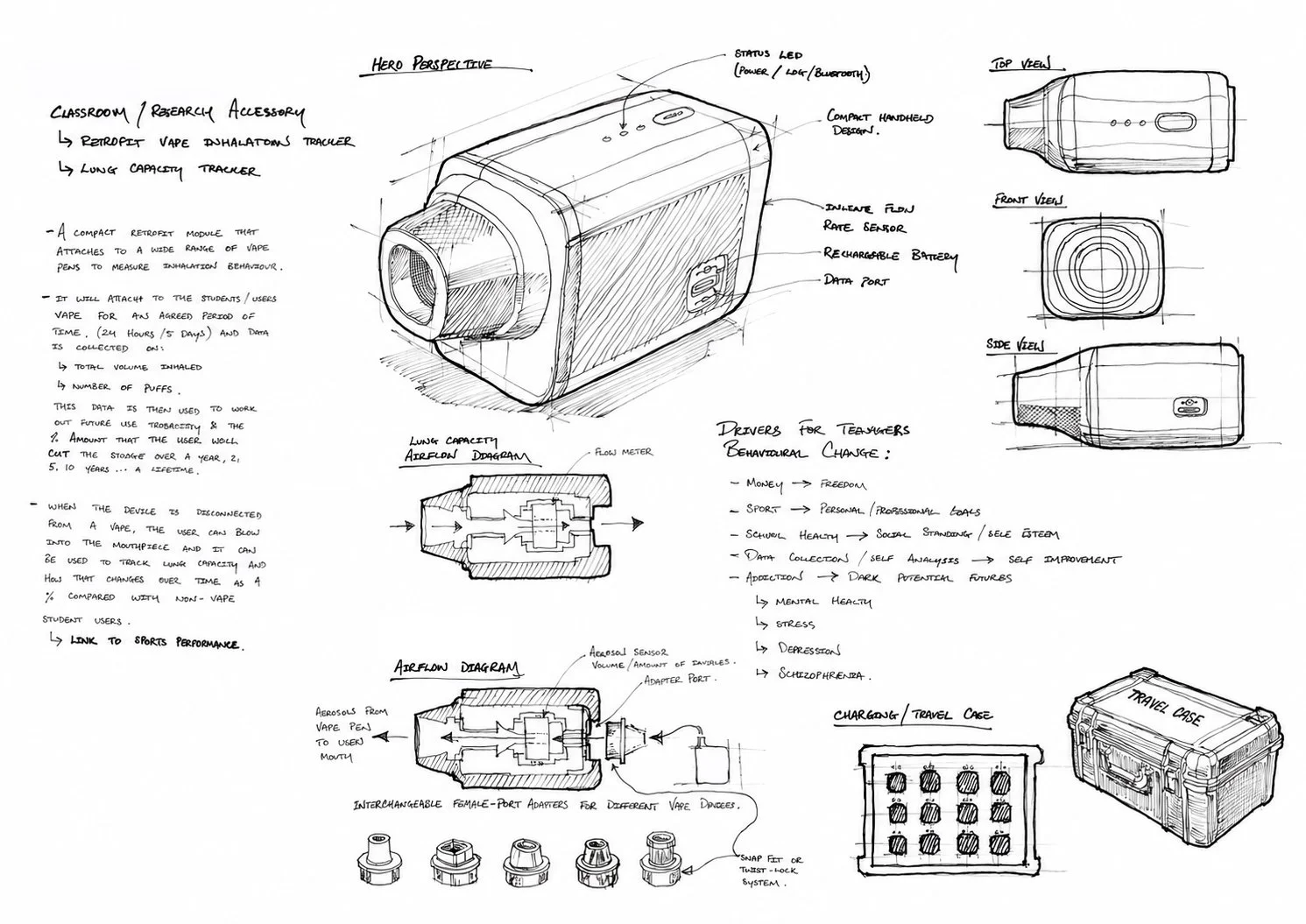
Initial concept sketches - Used as communication tools to discuss with stakeholders that the design is going in a direction that all parties are happy with and to start agreeing on details and functionality.
We consider user-behaviour, ergonomics and clarity. Products should give people usable clues about possible actions, provide feedback, reduce unnecessary cognitive effort and help prevent predictable mistakes.
That means asking whether a grip looks comfortable, whether controls are where people expect them to be, if the arrangement of parts is feasible, and does the product suits its market. Designing around real human behaviour matters just as much as visual character.
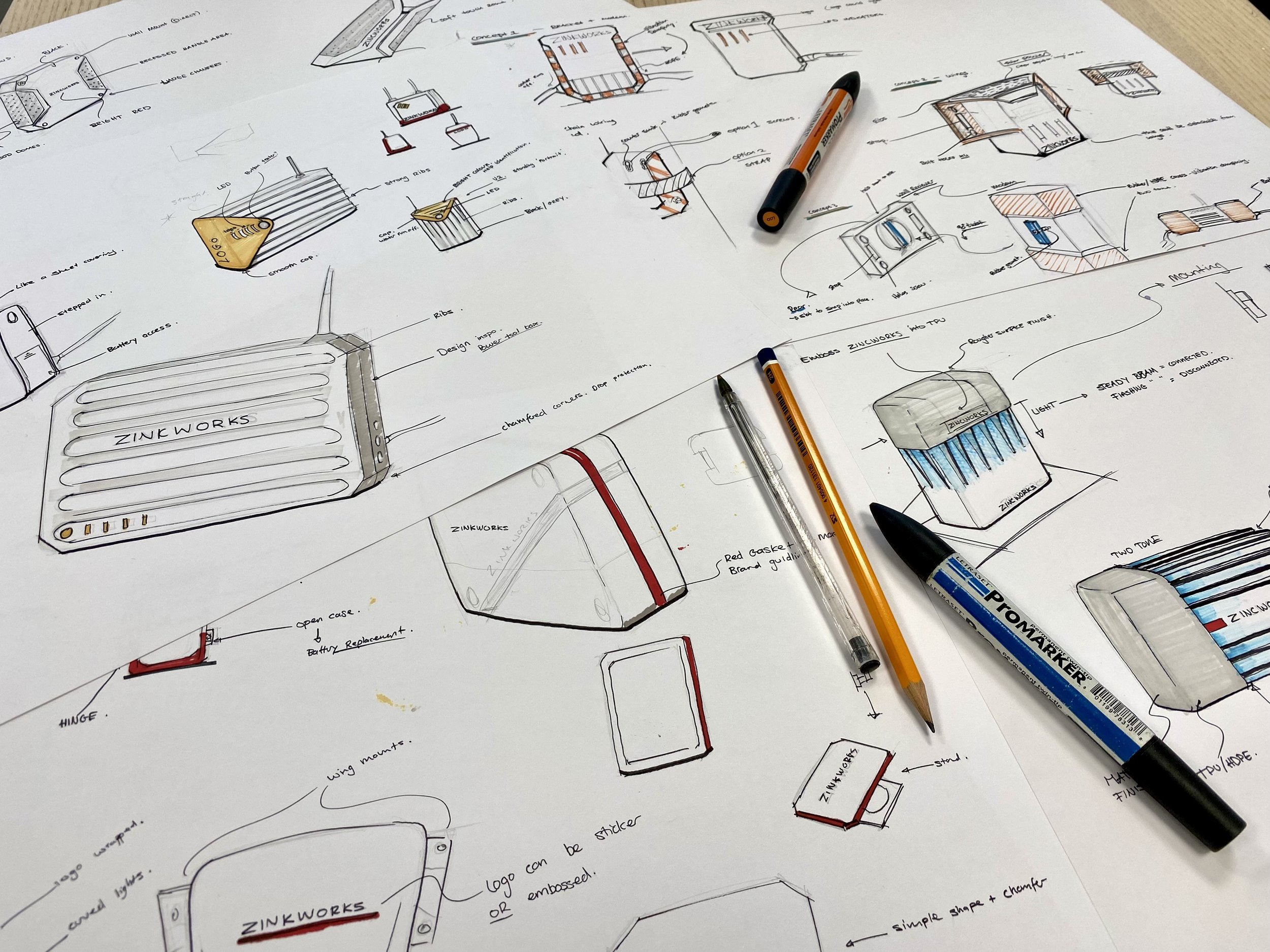
More detailed renders - To explore colour, texture, functionality, user-experience and branding opportunities.
The Initial renders are for clearer communication and evaluation of selected directions. It should not be mistaken for a production-ready design, however, used properly, they reduce uncertainty at the point where change is still relatively easy.
Approved concepts can then move into CAD modelling, prototyping, feasibility work, materials decisions, usability testing and more detailed visualisation. For clients, that means clearer conversations, faster comparison, earlier issue-finding and better-informed decisions before significant development resources are committed.
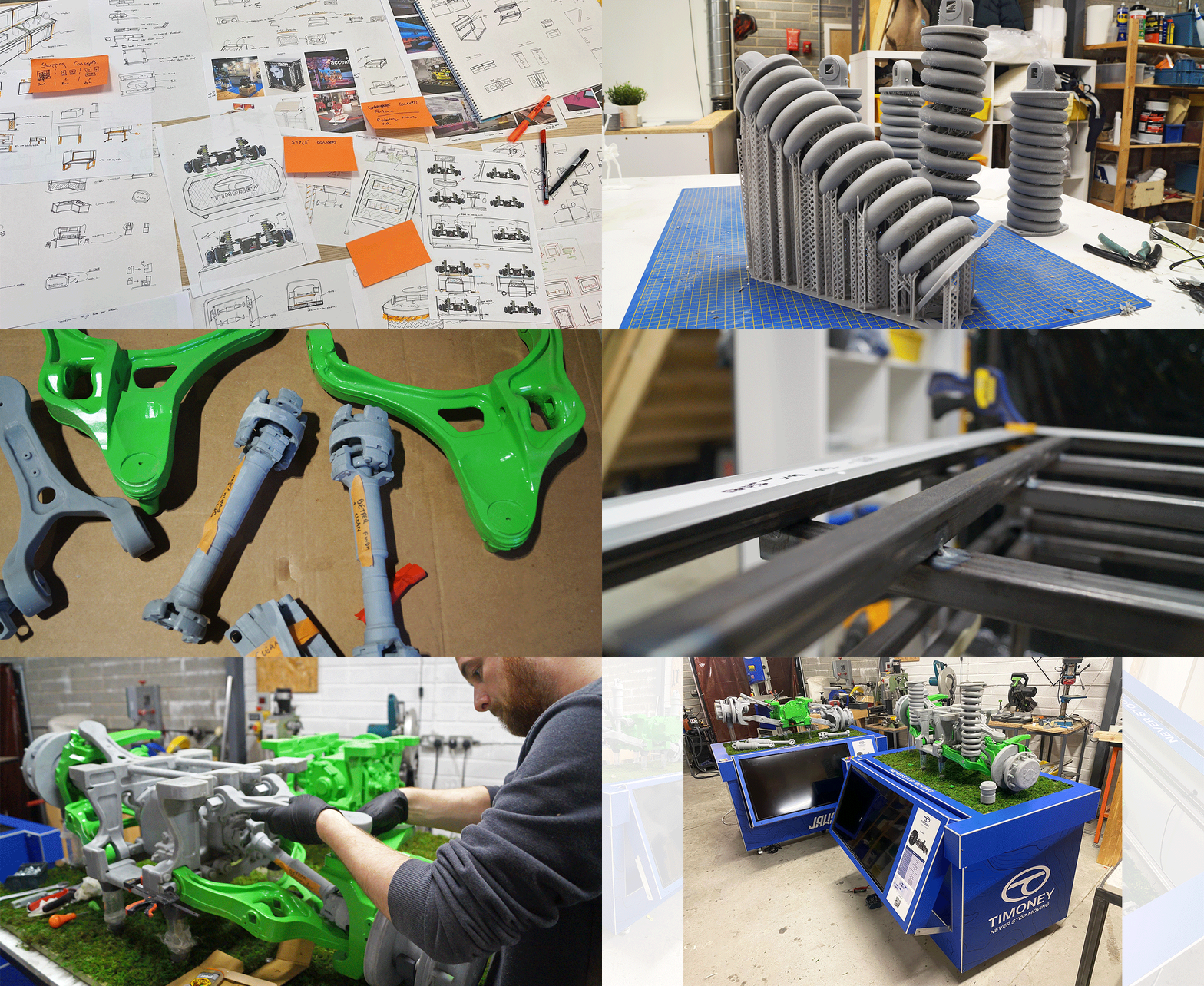
Showing how initial sketches and renders go on to influence the direction of a project and helps to guide the design and all involved towards a final result that is expected, agreed upon and fully thought through as a concept.
Sources / Further Reading
Norman, Don. The Design of Everyday Things (Revised and Expanded Edition, 2013) Preface.
Norman, Don.Signifiers, not affordances.
Gibson, James J.The Theory of Affordances. Chapter excerpt from The Ecological Approach to Visual Perception. Accessible copy hosted by Brown University.
Buxton, Bill. Sketching User Experiences: Getting the Design Right and the Right Design. Morgan Kaufmann, 2007. Video resource: Sketching User Experiences with Bill Buxton
Cross, Nigel. Design Cognition:Results From Protocol and Other Empirical Studies of Design Activity. In Design Knowing and Learning: Cognition in Design Education, Elsevier, 2001, pp. 79–103.
Do you have an early product idea that you need to turn it into a clear design direction? Team Human can help you explore concepts, communicate them well, and define the right next steps before detailed development begins.
Contact us today at info@teamhuman.ie or visit our website www.teamhuman.ie to explore how we can help you.
Based in Wicklow, Ireland, Team Human is a leading product design and innovation consultancy. Our expertise spans industrial design, medical devices, and more. Join us on this exciting journey of innovation, and let's shape a better future together.
#ProductDesign #HandSketching #InitialRenders #DesignSketching #Shape #Form #Render #DesignThinking #IterativeDesign #IterativeSketching #IndustrialDesign #ServiceDesign #TeamHuman #IrishDesign