
Concept Generation: How Good Product Ideas Start Taking Shape
The Challenge: To take the ideas in your head and to put some real shape, context, and scope on them, which will guide you in the product development stage.
You never truly start from a blank page. Concepts often begin as a question or a challenge in your mind, which slowly become a set of questions, which turn into sketches, assumptions, problems, and possibilities that need to be shaped into something clearer.
Concept generation is the stage in the design process where we explore different ways a product, service, interface, or experience could work. It is rough, it is quick, and it is to be done without fear of making mistakes. The point is actually to make mistakes; the value of concept generation is that weak ideas can be identified early, before jumping into the more expensive and time-consuming design phases of CAD, detailed engineering, prototyping, or manufacturing.
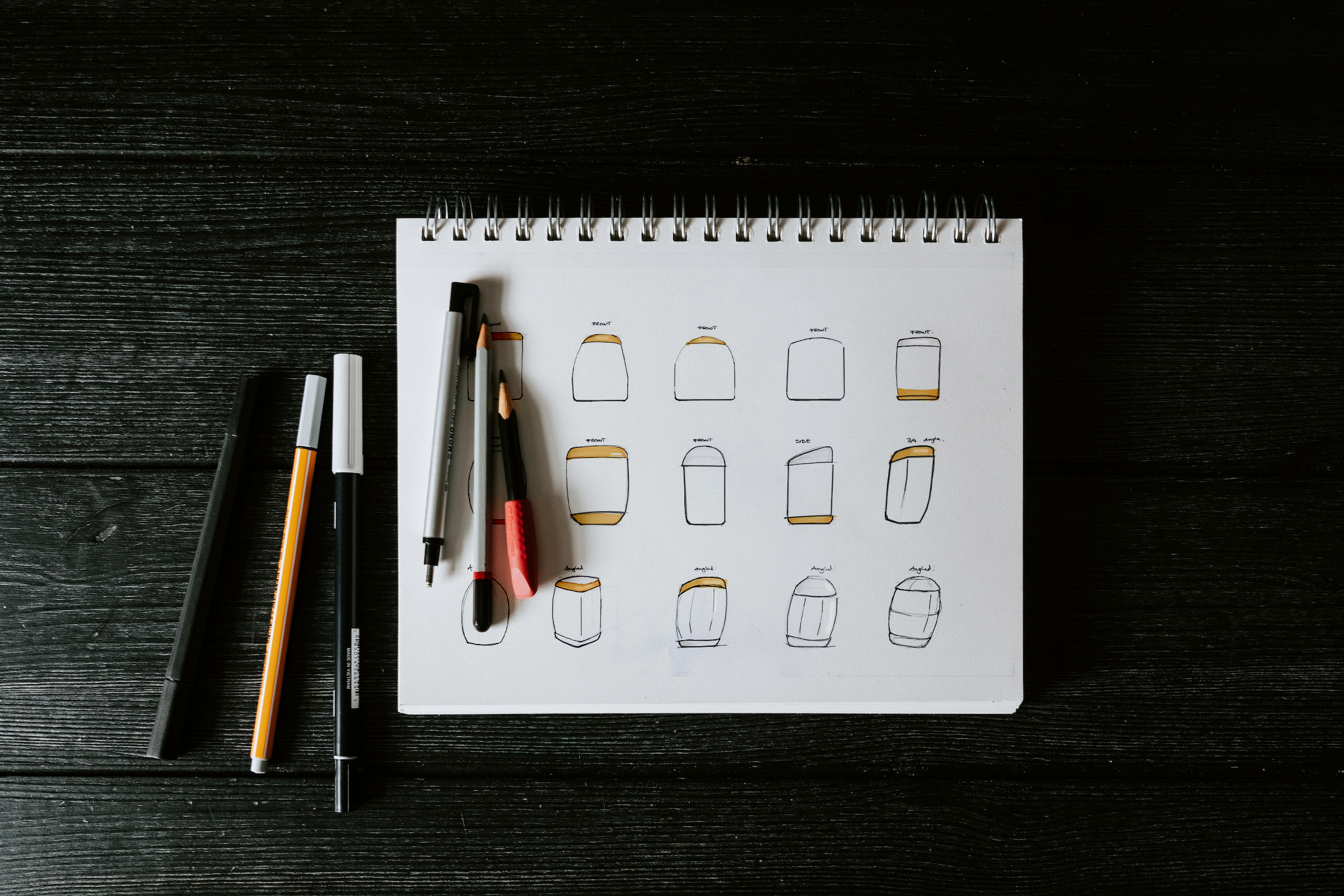
Rough concepts are put down to capture possible directions of exploration and to raise more questions that will need to be answered.
At Team Human, we use this stage to help clients move from “we have an idea” to “we have a direction worth testing.” The human-centred design approach emphasises that good design starts with people, not just technology or aesthetics. With that in mind, have we understood the problem properly? Who is the product for? What are they trying to do? Where are they struggling? What needs to feel simple, useful, safe, desirable, or reliable?
We also examine and question wider design inputs. Competitor products, materials, manufacturing methods, cost targets, sustainability goals, technical constraints, brand positioning, and their design language, and the business model behind the product.
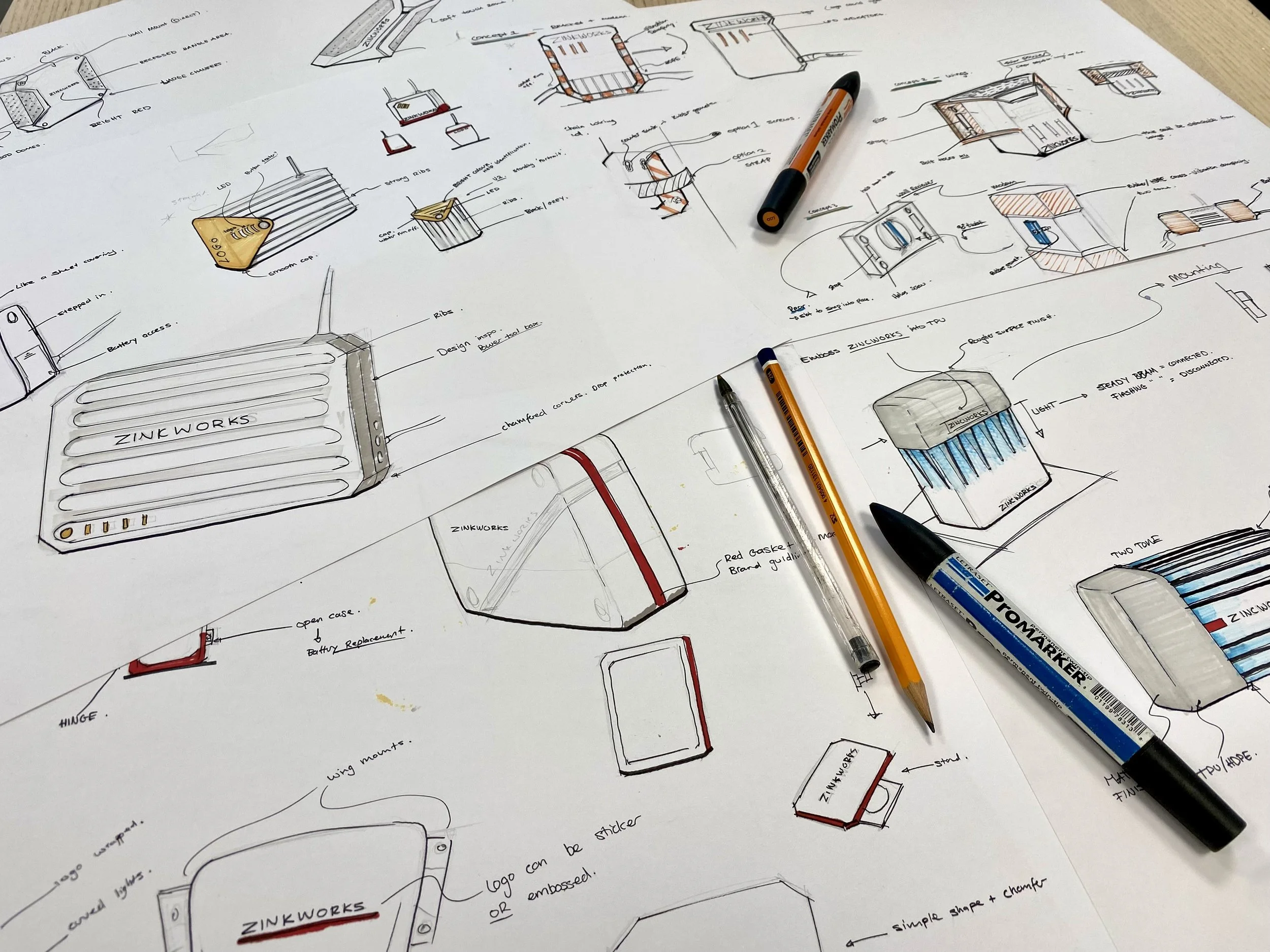
Ideas are recorded and sketched out in more detail to develop promising concepts and define a clear direction for a product.
Then we start generating options. This may involve sketching, brainstorming, benchmarking existing products, mapping the user journey, asking “How might we?” questions, creating rough mock-ups, or running design workshops with the client team. The goal is not to find the final answer immediately. The goal is to open up the space of possible answers.
For physical products, this might lead to form studies, ergonomic mock-ups, mechanism layouts, or early material decisions. For digital products, it might lead to user flows, wireframes, interface concepts, or clickable prototypes. Concept generation reduces risk because it allows teams to explore before they commit. It helps replace assumptions with better design decisions.
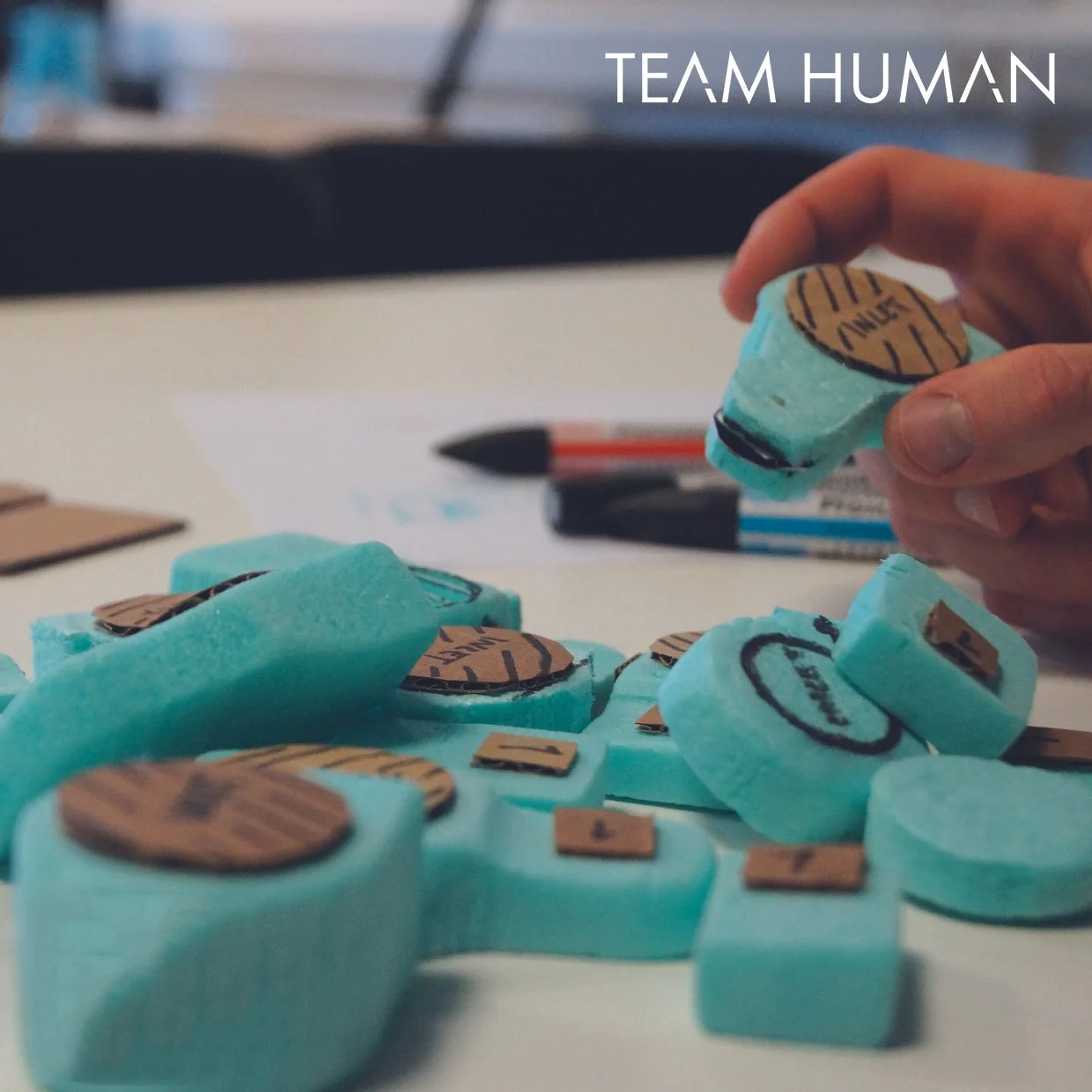
Foam & cardboard models are used to quickly explore ergonomics and potential product configurations.
Sources / Further Reading:
Design Council. Framework for Innovation, explaining divergent and convergent thinking within the Double Diamond process.
IDEO U. Brainstorming, as a semi-structured, team-based method for rapid idea generation.
IDEO U. 7 Steps of the Design Thinking Process, including framing a question, gathering inspiration, generating ideas, making ideas tangible, and testing to learn.
Interaction Design Foundation. User-Centered Design, discussing Don Norman’s human-centred approach and the importance of designing for people.
Nielsen Norman Group. Design Thinking Study Guide, outlining common phases such as empathise, define, ideate, prototype, test, and implement.
Do you have a product idea that needs structure? Team Human can help you explore, test, and develop strong product concepts before you invest in full prototyping or manufacturing. Get in touch to start shaping your idea into something real. Contact us today at info@teamhuman.ie or visit our website www.teamhuman.ie to explore how we can help you.
Based in Wicklow, Ireland, Team Human is a leading product design and innovation consultancy. Our expertise spans industrial design, medical devices, and more. Join us on this exciting journey of innovation, and let's shape a better future together.
#ProductDesign #ConceptGeneration #IndustrialDesign #UXDesign #DesignThinking #HumanCentredDesign #ProductDevelopment #Prototyping #Innovation #TeamHuman #Wicklow #Ireland #Dublin #IrishDesign